Care Beyond The Clock
Jasmin Child Care and Preschool in Fargo offers care 24 hours a day, five days a week, so parents working nights and odd shifts can keep their jobs.


At 9:45 at night, most childcare centers are dark. The toys have been put away, the classroom lights are off, and the last employee has gone home. But across Fargo-Moorhead, other workplaces are only changing shifts. Nurses and nursing assistants are beginning overnight rounds. Manufacturing employees are clocking in. Hotel, restaurant, cleaning, transportation, and public-safety workers are preparing for hours that do not fit neatly between breakfast and dinner.
For a parent scheduled to begin work at 10 p.m., the decisive question may not be whether a job is available. It may be whether anyone can care for a child while that parent works.
Sky Purdin, speaking on behalf of Jasmin Child Care and Preschool in Fargo, hears versions of that dilemma often. An employer may need someone for a late shift and have a willing worker ready to fill it, Purdin said, but the arrangement collapses if the worker cannot find childcare. A labor shortage, viewed from the family’s kitchen table, can be a childcare-hours shortage.
Jasmin has built its work around that reality. The nonprofit early-learning program offers care 24 hours a day, five days a week, along with daytime care on weekends. It recently added three classrooms and more playground space. Approximately 70 children attend across its different shifts, according to Purdin.
The center is also a multilingual gathering place where families from many cultures encounter one another every day. It is an early-learning program that tracks children’s development and prepares them for kindergarten. It connects parents with developmental screenings and community resources. It offers experiences outside the classroom, from gardens and swimming lessons to visits with first responders. And it is working toward a second location in Moorhead that could substantially expand its reach.
Taken together, those roles point to a much larger story. Jasmin is not simply a place where children stay while adults work. It is an example of what childcare becomes when a community treats it as education, family support, cultural connection, and economic infrastructure all at once.
A Schedule Built Around Real Life
Traditional childcare hours were designed around a traditional workday. Yet for many families, that workday has become more the exception than the rule. Hospitals operate around the clock. Factories run second and third shifts. Retailers and restaurants remain open late and on weekends. Many essential jobs have early start times, variable schedules, or mandatory overtime. Parents in those roles often piece together care through relatives, friends, opposite work schedules, and improvised arrangements. One disruption—a sick grandparent, a changed shift or a school closure—can threaten a paycheck.
Purdin sees Jasmin’s extended hours as a practical response to that mismatch. The center can accommodate early mornings, evenings, and overnights, creating options for parents who may otherwise be forced to turn down work, reduce their hours, or leave a job.
“If an employee needs to come in at 10 p.m. but doesn’t have childcare, that employee may have to quit because they don’t have anyone to watch their child,” Purdin said, describing the problem facing both parents and employers.
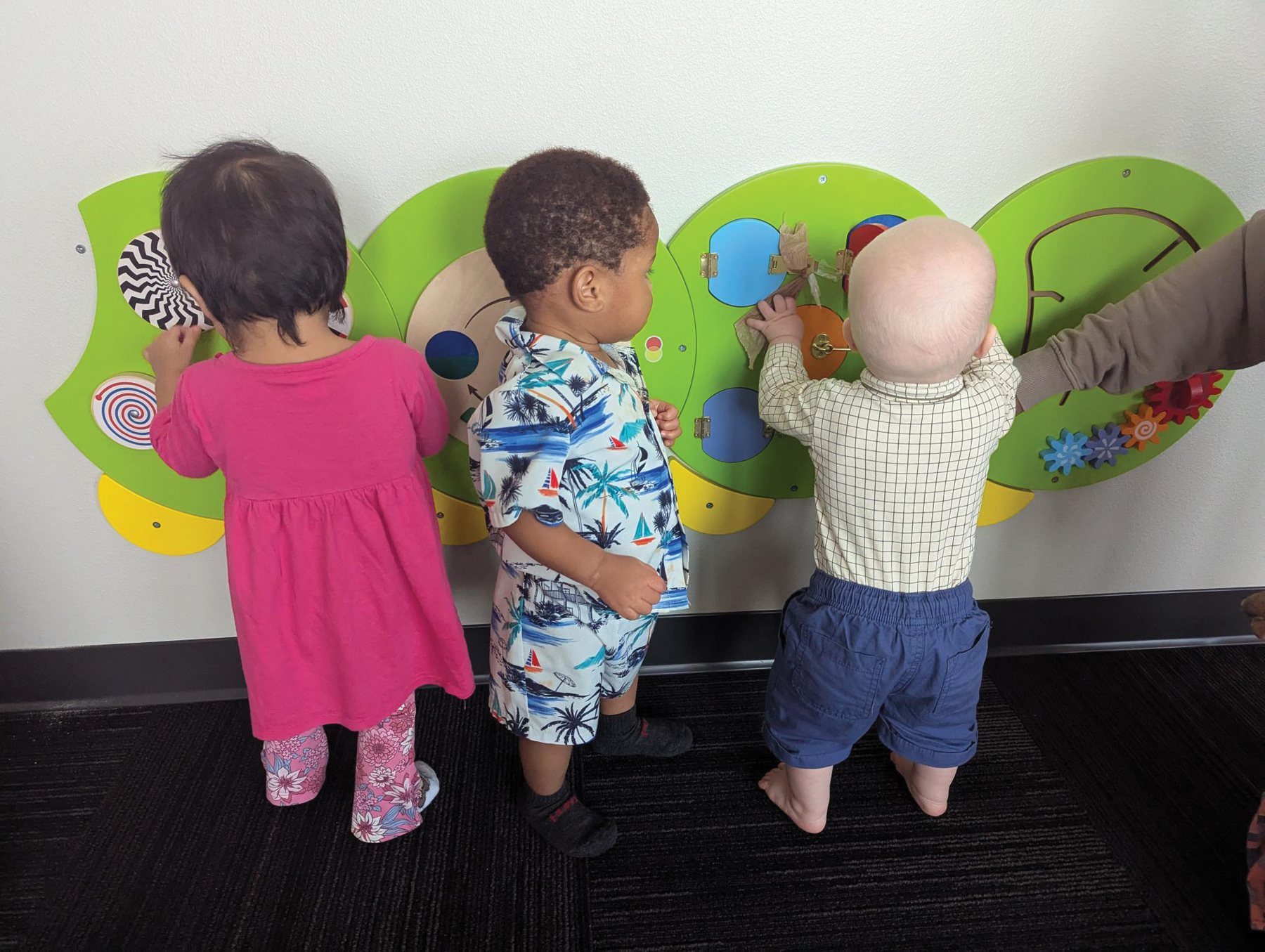
The center’s recent expansion made room for more families. Three additional classrooms and a larger play area increased the space available for children, while the round-the-clock weekday schedule allowed Jasmin to serve families across more than one work shift. Enrollment is spread throughout the day and night rather than concentrated in a single block of hours.
That model requires more than simply keeping the doors unlocked longer. Children need routines, meals, rest, learning, and emotional security regardless of when a parent’s shift begins. Teachers must make a late-night classroom feel predictable and safe. Communication between families and staff becomes especially important when one parent arrives before sunrise, and another child leaves in the afternoon.
Extended-hours care also presents a visibility problem. Families may not search for overnight childcare because they assume it does not exist. Employers may not know they can refer workers to such a program. Meanwhile, the people operating the center are consumed by the immediate work of caring for children.
“We’re busy doing the work and not so busy advertising,” Purdin said. “We’re putting a lot into the kids, and maybe not so many people know about us.”
For Jasmin, greater visibility is not merely a marketing objective. It could connect an unemployed parent with a workable shift, help a business retain a trained employee or give a family a more stable weekly routine.
A Center Born From a Community Need
Jasmin’s history begins with someone noticing a gap. Founder Rhoda Elmi was visiting a friend in Fargo when she heard about the local shortage of childcare. She researched the need, moved to the community, and opened Jasmin in January 2015. The center was founded and operated by an immigrant family that understood both the practical demands of childcare and the additional barriers faced by families learning how to navigate a new city, language, and network of institutions.

By 2017, Jasmin was serving 39 children and had a waiting list for infant care. Five employees outside the founding family were New Americans. The program offered kindergarten preparation and afterschool care, and its staff helped parents understand letters, prepare for school meetings, and navigate healthcare and other services.
That combination—care for children and guidance for the adults who love them—was present from the beginning.
“It’s not all about the money,” Elmi said in an early profile of the center. “It’s all about the community. We came here to help people.”
The center has grown considerably since then, but the philosophy remains recognizable. Jasmin’s stated mission is to provide high-quality, affordable early education, remove barriers to children’s success, and connect families with community partners. Enrollment is open to families of all backgrounds.
Trust Comes Before Services
The phrase “wraparound services” can sound bureaucratic. At Jasmin, it often begins with a conversation. A parent may be wondering whether a child is meeting developmental milestones. Another may need a car seat checked. A family may be unfamiliar with local therapy providers or unsure how to arrange a screening. Jasmin does not attempt to replace healthcare providers, social workers, or public agencies. Instead, staff members help families find the right door and, when needed, make the introduction easier.
Purdin described the center as a connector. Jasmin has worked with community providers, including Pediatric Partners, to make developmental screening and support easier for families to access. The center can share information, facilitate a visit, or help a parent communicate with a provider. The goal is not to pressure a family into accepting a service. Parents remain in control.
“We don’t push anything on anybody,” Purdin said. “We’re here to listen to the parents.”
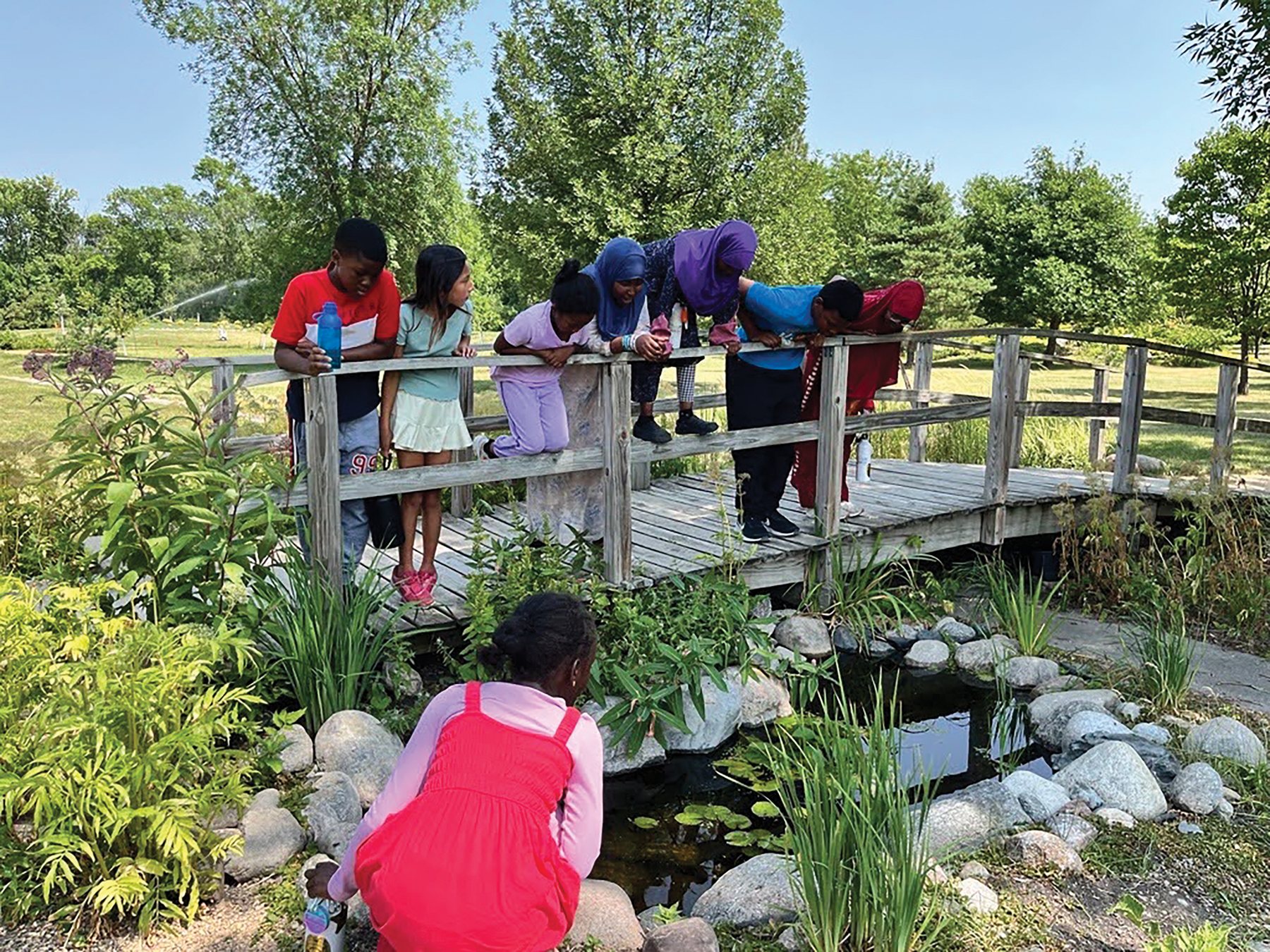
That approach depends on trust—something that cannot be created through a referral form alone. Childcare teachers see children across hundreds of ordinary moments—during meals, play, transitions, frustration, rest and discovery. They learn how a child asks for help, what captures the child’s attention and what changes when the child is tired or overwhelmed. Parents, in turn, know their children’s histories, temperaments, and lives outside the classroom. When both sides communicate openly, concerns can be identified earlier, and strengths can be reinforced more intentionally.
For families who speak languages other than English or who are unfamiliar with local systems, a trusted childcare provider can make an intimidating institution feel more navigable. A staff member who understands a family’s language or cultural frame of reference may help explain not only what a service is, but why it is being offered and what choices the parent has.
Many of these connections and added experiences are offered without an additional fee to families, Purdin said. That is particularly significant at a center where, by Purdin’s estimate, more than 90% of families have low incomes and may qualify for programs such as the Child Care Assistance Program or the federal Child and Adult Care Food Program.
The service model rests on a simple idea: a child’s development cannot be separated neatly from the family’s circumstances. A child may need literacy practice, but the family may also need a stable care schedule. A teacher may notice a developmental concern, but the parent may need help finding the right specialist. A family may qualify for assistance, but still struggle with a waitlist or application process. Effective early care responds to the whole picture.
Learning That Can Be Seen and Measured
Jasmin’s flexible schedule should not be mistaken for custodial care. Education remains central to the program.
The center participates in Bright & Early ND, North Dakota’s quality rating and improvement system for early care and education programs. Jasmin has reached Step 3 in the four-step system, Purdin said. The designation reflects work beyond basic licensing requirements, including attention to curriculum, classroom practice, child assessment and continued quality improvement.
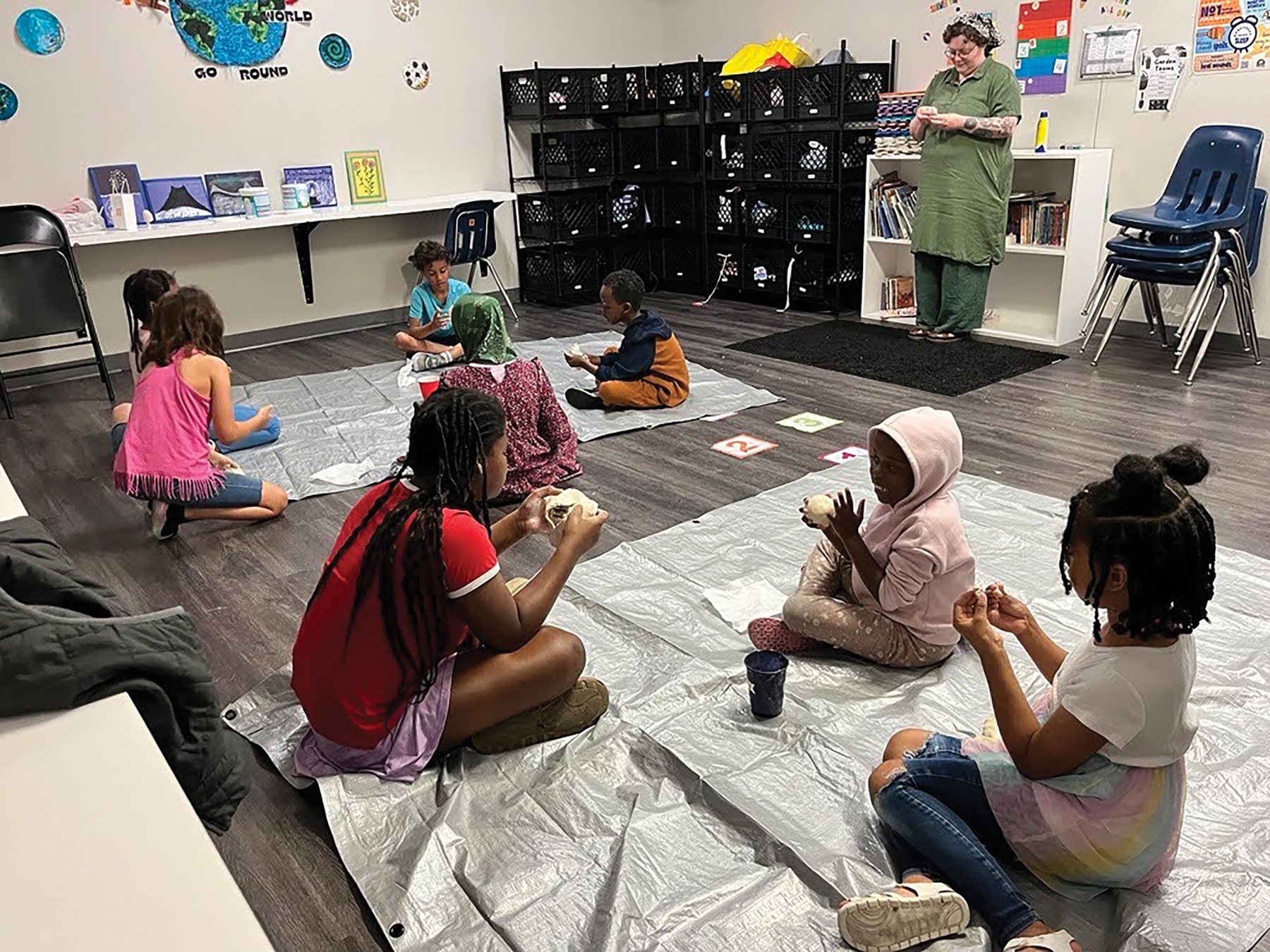
Jasmin uses Teaching Strategies GOLD, an observation-based system for following children’s development and learning. Teachers document progress across developmental areas and use that information to understand where a child is thriving and where additional attention may help. Purdin said the center assesses children regularly, including quarterly reviews of developmental progress.
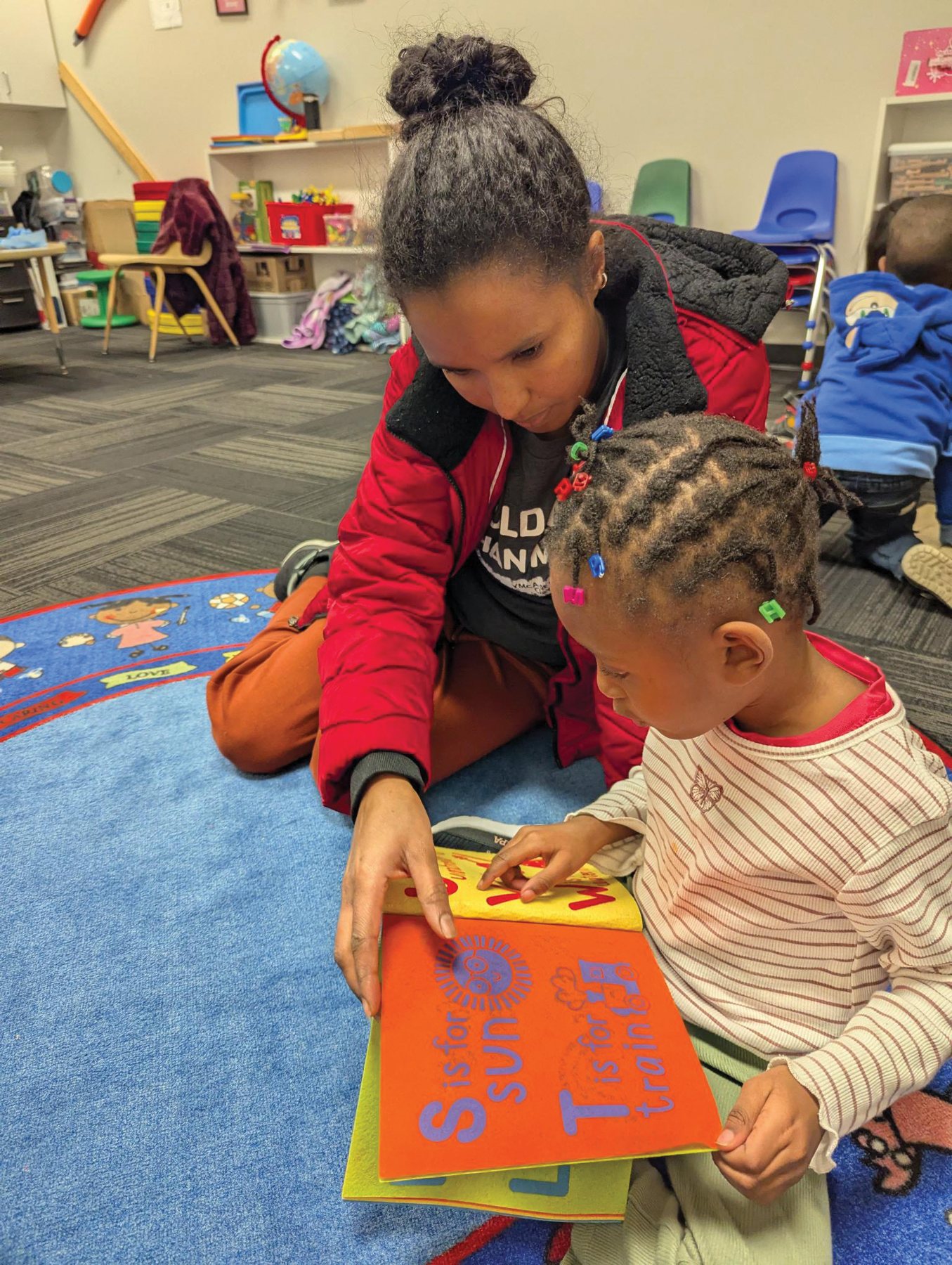
For parents, that process can turn a vague question—“Is my child ready?”—into a more useful conversation about specific skills. Teachers can discuss language development, early math, social-emotional growth, motor skills, attention, and independence. They can recognize progress that may be easy to miss from day to day and adjust classroom experiences to meet children at different stages.
In preschool, children practice the foundations they will need in kindergarten, like recognizing letters and numbers, developing vocabulary, writing their names, listening to stories, and learning how to participate in a group. Purdin said many children leave Jasmin ready for school, with some already beginning to read books independently.
Readiness, however, is larger than academics. It includes taking turns, communicating needs, handling frustration, following routines, making friends, and gaining confidence in unfamiliar settings. For a child learning English while also maintaining a home language, readiness may include becoming comfortable moving between linguistic worlds. For a child who has experienced instability, it may begin with feeling secure enough to explore.
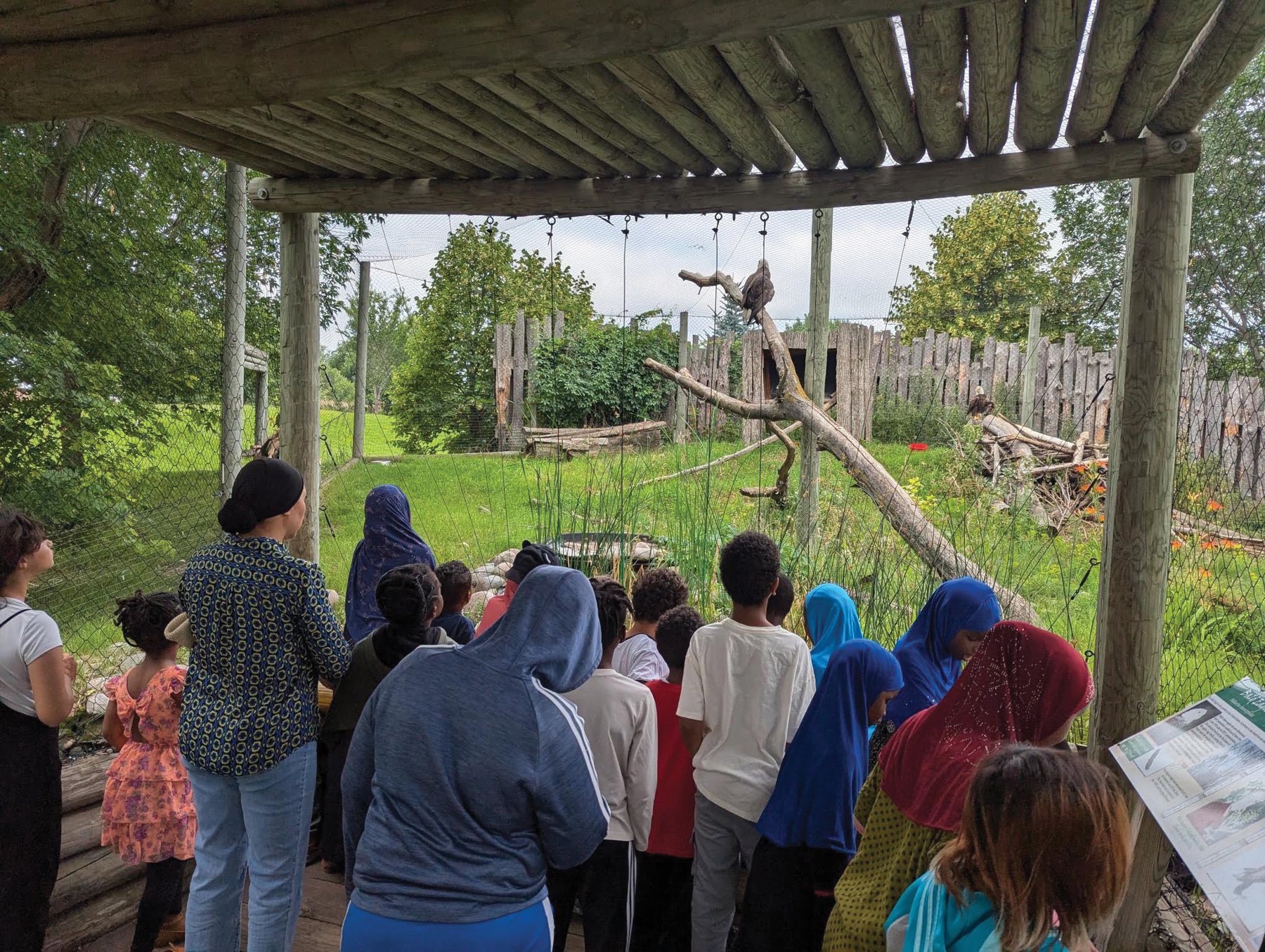
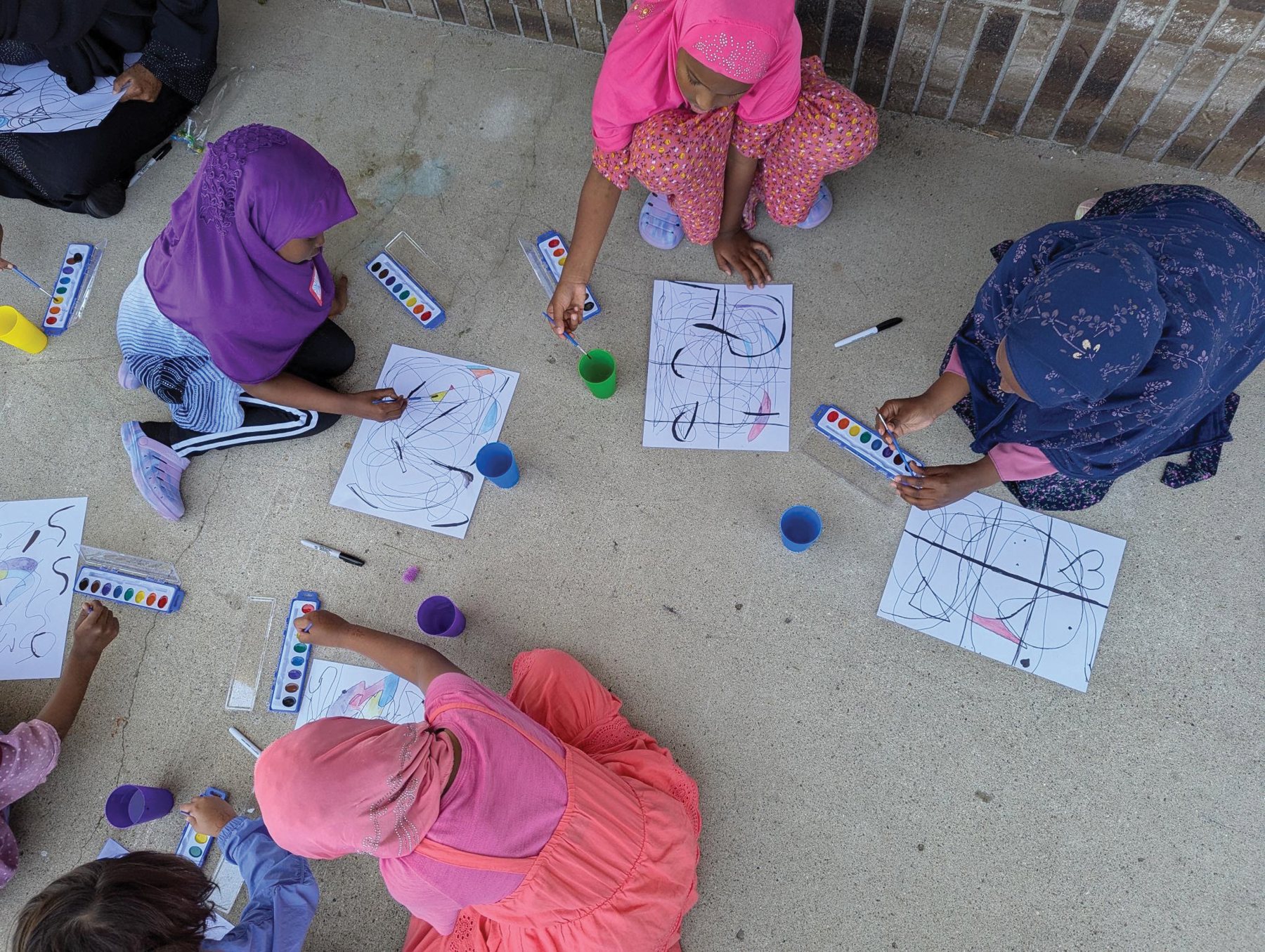
Jasmin extends learning beyond worksheets and classroom walls. A large garden gives children opportunities to touch soil, observe plants, and understand where food comes from. Garden grants have supported lessons about nutrition, sensory exploration and healthy eating. Field trips and community partnerships introduce children to swimming, camps, art, and public servants. Visits involving police officers, firefighters, and other first responders allow children to meet the people behind uniforms in a welcoming setting.
The center has also partnered with BIO Girls, a Fargo-based program that supports girls’ confidence and well-being. Each experience adds another layer to the curriculum, like movement, curiosity, resilience, community awareness, or the simple confidence that comes from trying something new.
A Classroom That Looks Like the World
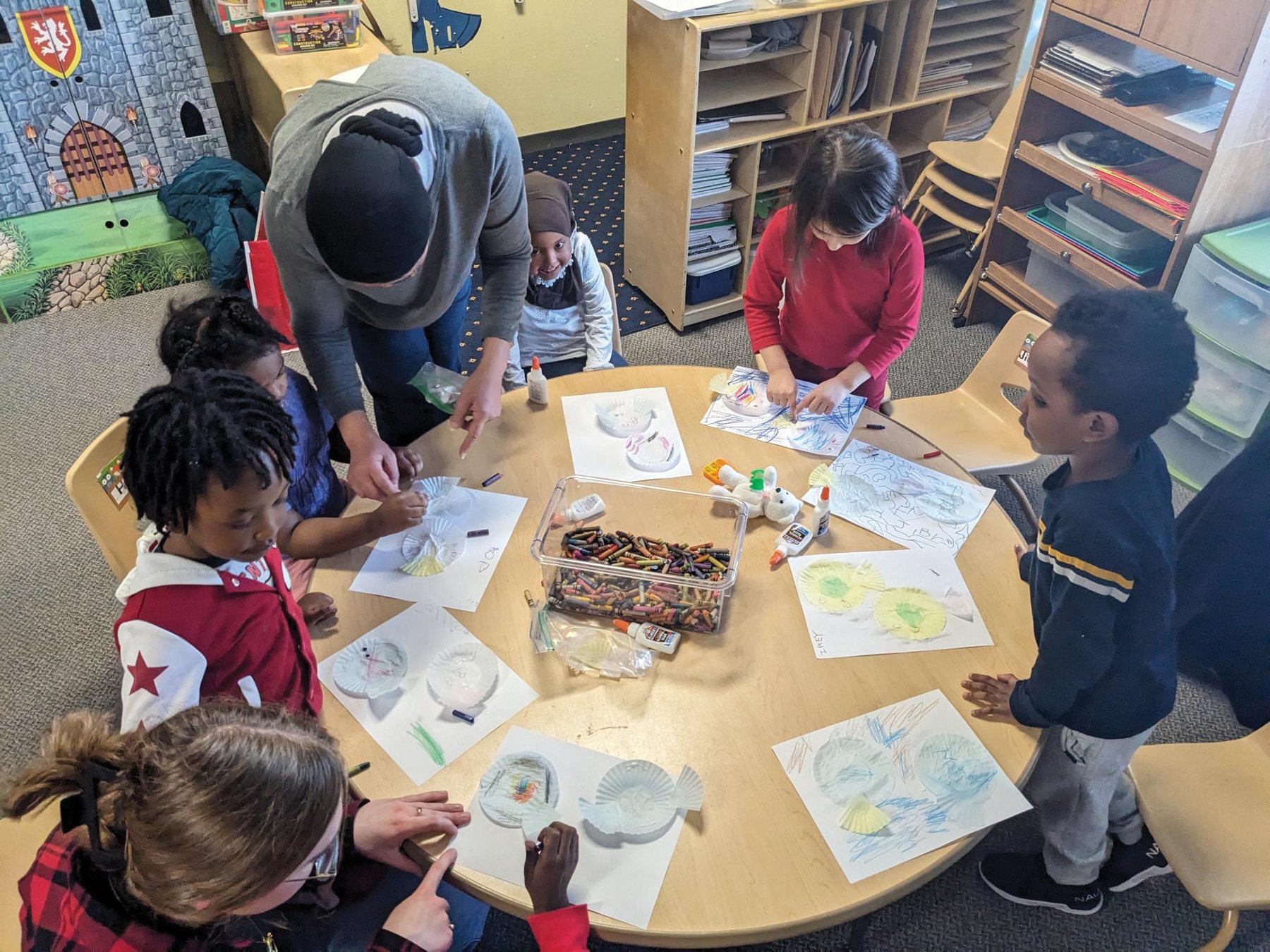
Over time, Jasmin has served children representing more than 30 ethnicities and 16 languages, Purdin said. The numbers are striking, but their meaning is best understood at child height.
In one classroom, a child may hear a friend speak a different language with a parent. Lunches, names, clothing, hair, family traditions and ways of celebrating may differ. Teachers may draw on several languages to reassure a new student or help a child connect an unfamiliar English word to something already understood. The formal language of instruction is English, Purdin said, but staff members can use other languages as bridges when children need them.
An Essentia Health profile of Jasmin reported that the center’s educators and care staff collectively speak as many as eight languages. That capacity can change a family’s first encounter with childcare. A parent who would otherwise struggle to explain a child’s routine may find someone who understands. A child entering an English-speaking classroom may hear a familiar word at the moment it matters most.
Purdin cautioned against treating any culture as a set of assumptions. Cultural competence, in this view, begins with patience and curiosity rather than a checklist. “Every person is an individual,” Purdin said. “Each culture has its strengths.”
That requires adults to pause before judging a behavior they do not immediately understand. A parent’s expectations about sleep, food, discipline, independence, or communication may be shaped by family and culture. A child’s silence may reflect language learning, uncertainty, or temperament rather than inability. Understanding begins when teachers ask what lies behind an action.
“Every child has their own story and their own circumstances,” Purdin said. “Every child deserves an opportunity and somebody who is patient and kind enough to see them for who they really are, and the strengths that they have, and then draw those strengths out.”
Purdin’s own child attends Jasmin, making the center’s diversity personal as well as professional. Growing up among children from many backgrounds makes difference ordinary rather than exotic. It widens a child’s sense of what a family, a language or a life can look like.
Books and classroom lessons can introduce culture, Purdin said, but direct experience teaches differently. Children learn through friendships. They ask questions without the self-consciousness adults often bring to difference. They discover that unfamiliar does not mean frightening—and that no single family’s habits define what is normal for everyone. “Exposure is the best way to educate,” Purdin said.
In a region shaped by migration, refugee resettlement, international education and changing workforce needs, those daily encounters have value far beyond one classroom. The children at Jasmin are practicing how to live in the community Fargo-Moorhead is becoming.
Childcare Is Workforce Infrastructure
Childcare is often discussed as a private family expense. Its effects are public.
When care is unavailable, parents miss shifts, reduce hours, decline promotions, delay education or leave the workforce. Employers lose workers they have recruited and trained. Colleagues absorb vacancies. Healthcare, manufacturing, hospitality and other sectors already struggling to staff nontraditional hours face an additional constraint.
Jasmin’s schedule makes that connection unusually visible. The center is not creating jobs in a factory or filling hospital shifts directly. It is making it possible for parents to accept and keep those jobs.
That is why Purdin wants deeper relationships with employers. A company that hires evening or overnight workers could tell applicants about Jasmin. It could help employees understand childcare assistance, reserve or support care options, contribute to expansion, or collaborate on schedules that families and providers can sustain. What may look like philanthropy can also be a retention strategy.
Essentia Health made that connection explicit in 2025, contributing $50,000 to support Jasmin’s expansion and its move to 24-hour weekday care. The health system described the partnership as a way to support families and strengthen the workforce, particularly for New American parents and others whose work does not fit standard business hours.
The investment illustrates a broader opportunity. Childcare centers cannot solve a regional labor shortage alone, and employers cannot create enough care simply by distributing a list of providers. But businesses, governments, philanthropic organizations and childcare professionals can align resources around the hours, locations and age groups where families face the largest gaps.
Purdin believes greater partnership across sectors is essential. That includes financial support, but it also includes awareness. An employer who knows that extended-hours care exists can share that information before an employee reaches a crisis. A community organization can bring screenings or enrichment to children where they already spend their days. A city can make land available for a new center. A healthcare system can recognize that supporting childcare helps support its own workforce.
Seen that way, a childcare classroom is part of the region’s economic foundation, as consequential in daily life as transportation or housing. If one piece fails, opportunity narrows.

The Cost of a Place in the Classroom
Even an innovative center operates within a childcare economy that is notoriously difficult to balance. Families need tuition to remain affordable. Teachers deserve wages that reflect the skill, patience, and responsibility their work demands. Programs must cover staffing, food, training, insurance, utilities, equipment, supplies, facilities, and compliance costs. Infants and younger children require especially low staff-to-child ratios, which makes care more expensive to provide precisely when many parents are least able to absorb the cost.
Public assistance helps bridge the difference. North Dakota’s Child Care Assistance Program helps eligible low-income families pay for care while parents work, train, or attend school. But access to the program has been constrained. The state began a waitlist for new applicants on Dec. 1, 2025, while giving priority to households with very low incomes and families experiencing homelessness.
Purdin said the delay has left some families caught between qualifying for help and actually receiving it. Without assistance, a parent may be unable to afford care; without care, the parent may be unable to begin working; without work, the family cannot build the income and stability the program is meant to support.
For providers, assistance delays create another problem. A center can have space, a family can want that space, and an employer can have a job available, yet the arrangement still may not come together. The empty seat does not necessarily signal a lack of demand. It may signal that the financing mechanism between family and provider has stalled.
That is why childcare policy cannot be measured only by the number of licensed slots. Hours matter. Location matters. Affordability matters. The availability of infant care matters. Language access and trust matter. Whether a family can actually convert eligibility into assistance matters. Jasmin’s experience places all of those variables in one room.
The Teachers Behind the Model
Programs, grants, and partnerships are visible in announcements. The daily labor that makes them meaningful is quieter.
Jasmin’s teachers welcome children at unusual hours, notice developmental changes, plan lessons, prepare activities, mediate conflicts, communicate with parents, and create calm for children who may arrive tired or uncertain. They help children learn English without treating a home language as a problem. They remember who is practicing a name, who is hesitant in the water, who has begun to share more easily, and who needs another patient invitation to join the group.
Purdin repeatedly returned to the importance of those educators. They are the people doing the work “day in and day out,” often without the recognition given to other professions that communities depend on.
The point is more than ceremonial. Childcare quality depends on relationships, and relationships depend on a stable, skilled workforce. When teachers leave because wages are too low or the work is unsustainable, children lose trusted adults and centers lose accumulated knowledge. Supporting childcare therefore means supporting the people who provide it—not only buildings, programs, or enrollment targets.
Looking Across the River
Jasmin’s next chapter may take shape in Moorhead.
The organization has been developing plans for a second childcare and community center on the Minnesota side of the metro. In December 2022, the Minnesota Department of Employment and Economic Development awarded Jasmin a $120,000 Child Care Economic Development Grant for the Moorhead project. Blossom Communities, which has assisted with development work, describes the project as new construction combining childcare and community space.
Purdin said Moorhead’s City Council recently approved the sale of land to Jasmin. Earlier possibilities involved a donated or federally supported parcel with development deadlines attached, Purdin explained. Purchasing the property would allow Jasmin to move according to the realities of fundraising and construction rather than risk a timeline it could not responsibly meet.
The word “community” in the project description is important. The vision is not merely to reproduce the Fargo center on another parcel. It is to create a place capable of supporting children and families more broadly—a physical hub for the partnership model Jasmin has developed over the past decade.
The project remains dependent on capital. Jasmin is fundraising, looking for partners and refining the scale of what can be built. Purdin estimated that the center could serve roughly 80 to 120 children across day and night shifts, though the final capacity will depend on the building and resources available.
If completed, the Moorhead center could address several needs at once: more childcare capacity, more options for nontraditional work hours, culturally responsive early education and easier connections between families and service providers. Its location in Moorhead would also make care more practical for Minnesota families who now cross the river or cannot make a Fargo location work with their commute.
But the project also demonstrates how difficult childcare expansion can be. Recognizing demand is only the beginning. Land acquisition, design, licensing, financing, construction, and long-term operating costs all must align. Grants can catalyze a project without completing it. Public partners can open a door, but community and private investment may still be needed to walk through it.
Jasmin’s effort is therefore both a promise and a test. The need appears clear. The organization has a model and a history. The remaining question is whether the region can assemble the partnerships required to turn land and plans into classrooms.
A Shared Answer to a Shared Problem
Childcare discussions often become trapped in false divisions. Is care the responsibility of parents or employers? Is it education or economic development? Should government, business or charity pay? Is a center serving children, families or the wider community?
Jasmin’s work suggests that the answer can be all of the above.
A child learning to write a name is preparing for school. A parent dropping that child off before an overnight shift is participating in the workforce. A teacher who speaks a family’s language is building trust. A developmental referral can influence a child’s future. An employer’s contribution can help retain workers. A city’s land decision can determine whether dozens of new care spaces are possible.
Working together does not mean asking one institution to do everything. It means recognizing how much each sector has at stake. Employers need reliable workers. Cities need healthy neighborhoods and a strong tax base. Schools benefit when children arrive ready to learn. Healthcare systems need staff at every hour. Parents need the ability to earn a living without compromising their children’s safety. Children need stable relationships and opportunities to thrive.
The connections are not theoretical. They run through the daily choices families make about work, food, transportation, health, and education.
Purdin wants the community to understand both the scale of the challenge and its solvability. “Childcare is a big issue, and there are a lot of misconceptions around it,” Purdin said. “But it’s an issue that we can work together as a community to improve.”
Jasmin Child Care and Preschool sits at the intersection of those needs. Its lights remain on when much of the city sleeps, but the larger significance of the center is not simply that it operates late. It is that Jasmin sees the full lives surrounding every classroom—the shift schedules, languages, ambitions, obstacles, and untapped strengths—and builds care around them.
That is not a peripheral service. It is part of how a community works.
jasminchildcare.org | Facebook: /jasminchildcare | Instagram: @jasminchildcareandpreschool
Photos provided by Jasmin Child Care and Preschool
Published October 20, 2026
