From Classroom To Creative Calling
Rising Dawn Ceramics Rising Dawn Ceramics is a community pottery studio founded by Kelsey Williams that offers memberships and classes open to the public. The space also functions as Kelsey’s personal studio for her own creative work. “It’s like a gym membership for pottery,” she explains. Although Kelsey stepped away from the public school system


Rising Dawn Ceramics
Rising Dawn Ceramics is a community pottery studio founded by Kelsey Williams that offers memberships and classes open to the public. The space also functions as Kelsey’s personal studio for her own creative work. “It’s like a gym membership for pottery,” she explains.
Although Kelsey stepped away from the public school system to run her studio full-time, education remains at the center of her work. After seven years working in a high school, she found that teaching prepared her well for studio ownership. “A classroom is like the most busy, intense, chaotic studio you can run,” she says. “Now that I’m out of the school, running this studio feels like a breeze.”
Her experience gave her confidence teaching groups with a wide range of skill levels, and she frequently draws on classroom management strategies, solving how to meet people where they’re at and help them get where they want to go. Community-building is a core value for Kelsey, and both her former classroom and her current studio are intentionally designed as safe spaces for learners to try something new.
Growing up in the public school system, I was surrounded by reminders to stay curious, a message that stuck with me throughout my life. Encouraged by educators to explore ideas and think creatively, curiosity became a through line in my work as an artist, community member, and professional. That same curiosity guides my work at Folkways, where I work with a team dedicated to combating social isolation and loneliness through events like the Red River Market, Night Bazaar, and Christkindlmarkt.
Folkways champions big ideas and supports small business owners who are passionate about sharing their craft with the community. The Red River Market last season helped launch more than 25 small businesses, and vendors earned over $1 million in sales. This impact makes it possible for creatives to pursue their passions while sustaining a livelihood.
I have met many vendors who share their work at Folkways events, and many of them are educators or have backgrounds in education. Their creativity, adaptability, and curiosity extend far beyond the classroom and shape their artistic and entrepreneurial journeys. Educators are natural creatives. Every day they adapt, problem-solve, and spark curiosity in others. Teaching requires imagination, flexibility, and emotional awareness, and many educators carry those skills beyond the classroom into the arts, entrepreneurship, and community leadership
Here are five local small business owners you can find at Folkways events who not only encourage curiosity in their students, but also pursue creative ventures of their own.

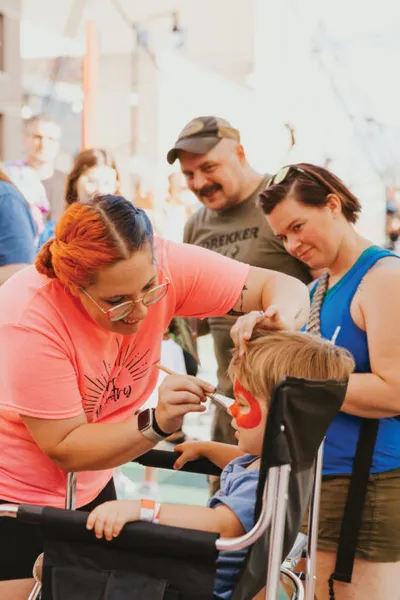
GrowArtistry, run by Devyn Baldwin, is all about creating magical, interactive experiences for kids and adults alike. Through pop-up art bars, art kits, and face painting, Devyn brings creativity into community spaces beyond the classroom. She jokes, “if it’s artsy, I probably do it.”
Now in her fifth year teaching elementary art, Devyn sees creativity as essential not only to artmaking, but to life itself. Her teaching goes beyond projects and techniques, and she enjoys getting to “teach important life skills.” Being active both within her school district and in the broader community strengthens her connection with students. When they see her at community events, “it makes them feel special and excited that their art teacher painted their face,” she says. “It strengthens that connection beyond the classroom.”
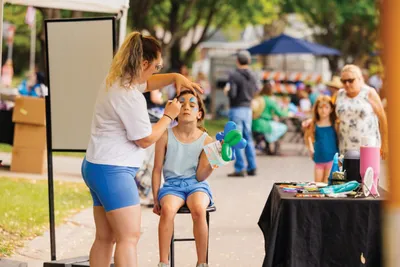
Devyn’s background in education helps her break projects into manageable steps and meet learners where they are. “Teaching has also helped me understand pacing, attention spans, and communication,” she mentions. Creating something can be challenging, and she finds joy in witnessing those “aha” moments. Through her work, she sees how the arts foster confidence, connection, and growth. Creativity, for Devyn, is about building trust in yourself and discovering what’s possible.
Jenny Sue
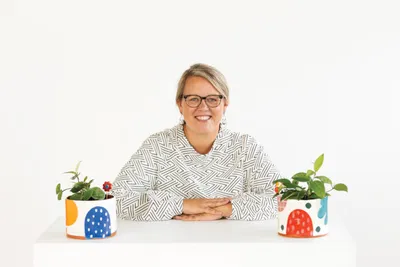
The local artist, Jenny Sue, draws inspiration from her North Dakota, Minnesota, and Scandinavian heritage. Her work celebrates nostalgia, place, and everyday joy through classic Midwest sayings and northern-inspired design. She creates magnets, ornaments, earrings, tiles, and functional pottery that feel both playful and deeply connected to her roots.
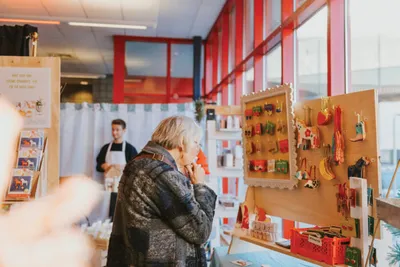
After years in education, Jenny made the leap to running her business full-time. “It was a big decision,” she shares, “but one that has allowed me to fully invest in building something meaningful and sustainable.” Her background as an educator continues to shape how she works, teaching her to build community, embrace diversity, and adapt under pressure.
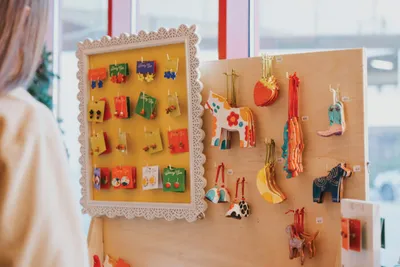
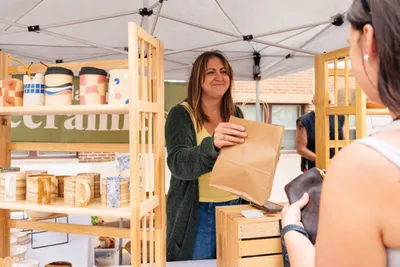
You can find Jenny during the summers at the Red River Market, where she enjoys connecting with customers. Teaching prepared her to adapt quickly, stay calm under pressure, and keep moving forward even when things do not go perfectly, skills she sees as essential to entrepreneurship. For Jenny, both teaching and art require empathy, curiosity, and meeting people where they are. Building a business, much like building a classroom, means creating spaces where people feel welcomed, encouraged, and inspired
Advice For Entrepreneurship From These Educators
Start small, stay disciplined, and surround yourself with community.
Kelsey encourages aspiring business owners to “try it out in small steps.” She balanced teaching and business ownership for four years before transitioning full-time. Running a business, she notes, “takes discipline to get your tasks done when you don’t have to report to anyone.” Finding community, especially among other small business owners downtown, has been one of the most rewarding parts of her journey.
Take risks and find what works for you.
Creativity requires risk-taking, and Devyn recommends to other small business owners to lean into personal experimentation. She encourages learners of all ages to “find what works for you or put your own unique spin on it.” As she has trusted the process and explored new ideas, doors have opened in unexpected ways. “It takes a lot of time and effort,” she says, “and when you care about what you’re building, it won’t always feel like work.”
Trust your creativity, it has value.
Educators already have many of the skills needed to run a business: multitasking, planning, communication, and problem-solving. Jenny emphasizes focusing on what excites you and the problems you enjoy solving. Through experimentation and curiosity, creativity doesn’t have to remain a side hustle, it can become “a powerful way to build a life and a livelihood.”
Use creativity to avoid burnout.
Burnout is a common challenge for many educators, as teaching can feel like a constant, fast paced commitment. Jeff encourages educators and creatives alike to find a creative outlet as a way to step away from their day jobs. His advice for anyone starting a business is “to have a clear and reasonable picture of what you consider success.” He also encourages not putting pressure on yourself to be the biggest artist. Running a business requires setting achievable goals if you want to make a living from your work. Art comes with passion, and Jeff suggests using that energy to commit at least a couple of hours each week to the business side of your creative practice.
Problem solving can be creative.
Being a creative, and spending time with children, was Katie’s favorite part of teaching. She challenges herself daily to “turn any hum-drum activity into something joyous but with purpose,” she says. As a small business owner, she not only designs cookies, but also thinks creatively about every aspect of owning a business, such as how to get people in the door, how to handle larger orders, and how to navigate slower summer weekends. She encourages other business owners to also take a creative approach to problem-solving. For any younger entrepreneurs wanting to start out on their ideas, Katie strongly encourages learning financial management. You can be a great content creator or have beautiful products, but she says, “If you don’t know how to keep track of all your income and expenses and how to use those numbers, it will be infinitely harder to be sure you’re successful in running your business.
Copper Sun Creations
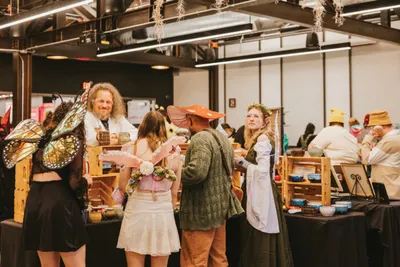
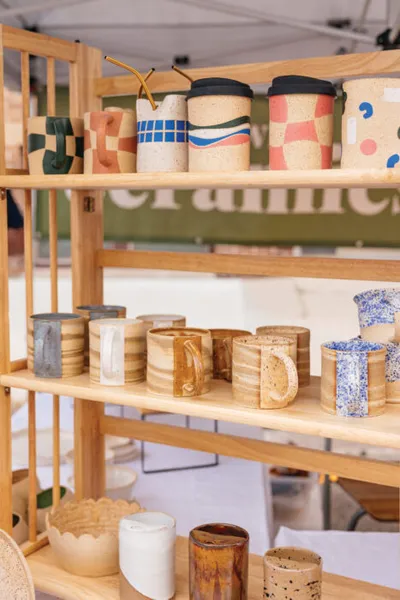
Focusing on wheel-thrown functional ceramics with unique textual elements, Jeff Bodwin, owner of Copper Sun Creations, is a chemistry professor who combines his interests in art and science. His approach to ceramics is experimental, and he is particularly interested in developing glazes that create texture in interesting or unpredictable ways. His functional and decorative pottery offers both visual intrigue and a tactile quality that invites touch.
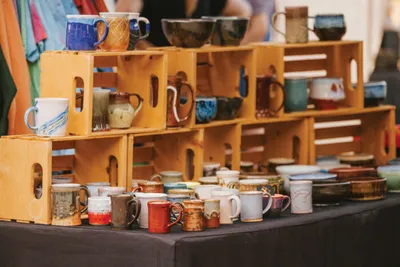
Ceramics were originally an escape for Jeff, but he now sees a strong crossover between chemistry and creativity. As a chemistry and biochemistry professor at Minnesota State University Moorhead, his scientific background deeply informs his artistic process. “Being a chemist has influenced my creativity more than my creativity has influenced my chemistry,” he says, “but the lines between the two have definitely gotten fuzzier over time.” Jeff challenges the idea that science must be bound to rigid rules, inspiring his students that curiosity is the most important part of being a good chemist, a mindset that often leads to creative solutions.
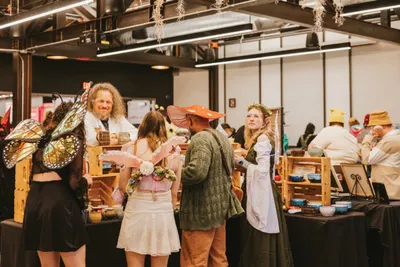
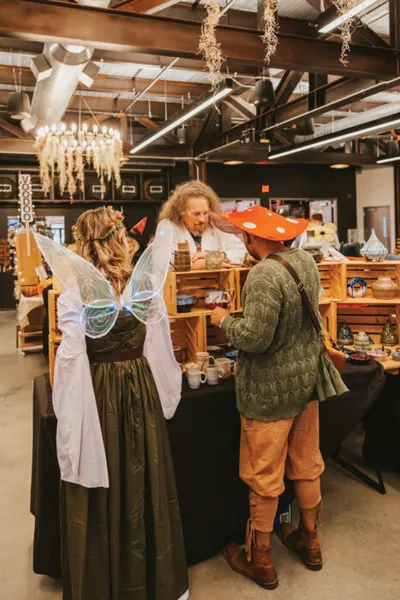
Chemistry brings a unique set of skills that translate naturally into artmaking. Creating artwork is, in many ways, testing and experimenting to see what works. Jeff thinks of his ceramic creations as research and enjoys discussing his process with others. His background in chemistry helps him test materials in the lab, kitchen, or glaze-mixing room, and he is currently testing ceramic glaze stability under household conditions to see whether glazes leach metal ions when exposed to substances like coffee or water. As a creative and educator, Jeff is familiar with projects that do not work the first time, a lesson that has shaped his teaching style. “They both require persistence and a willingness to be wrong,” he shares. One of the best ways to improve when making a mistake, is to “analyze why it happened, and then jump right back in and try again.”.
Cookie Krums Bakery

Katie Krumwiede, the creator behind Cookie Krums Bakery, chose a playful nod to her last name for her business. She specializes in stuffed cookies and decorated sugar cookies. Each stuffed cookie is “delightful, with each unique flavor having something different in the middle, depending on its flavor,” she says. In her West Fargo storefront she hosts cookie decorating classes and birthday parties, which are especially popular with children. You can also take a cookie decorating class from Katie at the following locations: Vista Center through Moorhead Community Ed, Unglued Maker Space, and various schools and daycares.
Her decade-long background in elementary education is evident in her business. In 2021, Katie made the leap to pursue her cookie bakery full-time, but mentions that, “once you’re a teacher, it never leaves you.” As a teacher she enjoyed being a leader of how her classroom ran, and those skills translated well to making responsible decisions and problem-solving for her business. “Both educators and small business owners are basically professional problem solvers,” she says.
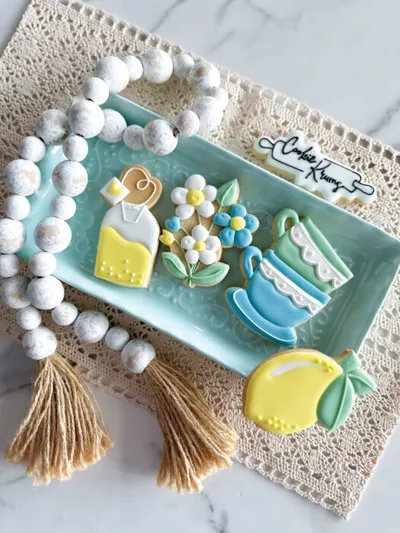
The strategies she uses to teach her cookie decorating classes were first developed in the school setting. She still has the opportunity to interact with children. “I love diving deeper into decorating strategies in my step-by-step classes that are open to all ages,” she shares. Some of those strategies include problem-solving and community building, which were engrained in her in the classroom. Even though she sees many different people in her shop, she takes small moments to make connections, whether that is seeing regulars when she vends at the Red River Market or remembering someone’s favorite sweet treat. It’s especially special for Katie when she has returning customers for birthday cookies, and says “I get to play a small role and almost see the kids grow up as I make their 1st, 2nd, 3rd, etc. birthday cookies.” One of her goals for this coming year is to lean even more into community building by creating a safe gathering place for families to connect and by hosting more unique events, such as craft nights.

Curiosity may begin in the classroom, but as these educators demonstrate, it does not end there. The same creativity, resilience, and problem solving they bring to their students now fuels businesses that strengthen our local economy and deepen community connections. Whether shaping clay, mixing glazes, decorating cookies, or creating interactive art experiences, they continue to teach by modeling what it looks like to take a risk, follow a passion, and build something meaningful. At Folkways, we are proud to create spaces where these entrepreneurs can share their work and connect with the community. We invite you to join us at an upcoming event to meet these vendors, experience their creativity firsthand, and support the small businesses that help our community thrive.
Folkways
Facebook | /wearefolkways
Instagram | @wearefolkways
Linkedin | /company/folkwaysco
Instagram | @campus.Fm
Tiktok | @campusfm
Published March 26, 2026
