How The FM Area Foundation Helps Donors—and Dollars—Do More
The FM Area Foundation plays a role unlike any other nonprofit in Cass and Clay counties. While many organizations focus on delivering services or strengthening nonprofit operations, the Foundation’s mission is centered helping people become better, more intentional philanthropists. “We strive to be the voice of philanthropy in this community,” President of the FM Area


The FM Area Foundation plays a role unlike any other nonprofit in Cass and Clay counties. While many organizations focus on delivering services or strengthening nonprofit operations, the Foundation’s mission is centered helping people become better, more intentional philanthropists.
“We strive to be the voice of philanthropy in this community,” President of the FM Area Foundation Eric Wilkie said. “At our core, we work with citizens to promote giving by helping them give back in ways that are smart, impactful, and meaningful for both the community and themselves.”
As one of roughly 1,000 community foundations nationwide—and the oldest and largest in the region—the FM Area Foundation has spent more than six decades cultivating deep knowledge. That perspective allows the organization to act as a trusted guide, helping donors navigate the increasingly complex intersection of generosity, tax strategy, and long-term community impact.
A Different Kind of Nonprofit
Unlike most nonprofits, the FM Area Foundation does not primarily serve clients or provide direct programming. Instead, it works upstream by partnering with individuals, families, financial advisors, and attorneys to help donors structure their giving in ways that maximize both impact and sustainability.
“Other nonprofits are working directly with people who need services, or they’re helping nonprofits become stronger organizations,” Wilkie said. “We work with citizens. Our job is to help people figure out how to give back—and how to do it well.”
In a region with more than 2,200 nonprofits across Cass and Clay counties, donors are often overwhelmed by choices. Many want to give generously but aren’t always sure where their dollars will do the most good, or how to align their giving with personal values, family goals, and long-term planning.
That’s where the Foundation steps in.
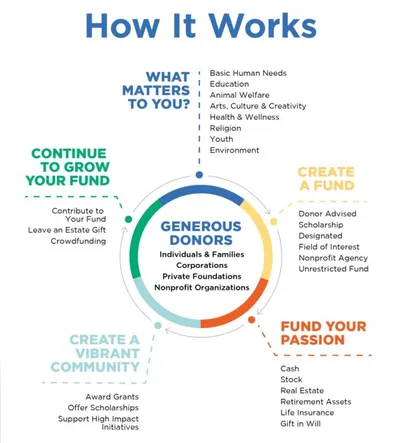
One of the FM Area Foundation’s core strengths is its ability to simplify charitable giving without sacrificing intentionality. Through donor-advised funds, designated funds, endowed funds, and other charitable vehicles, the Foundation provides what Wilkie describes as a “one-stop shop” for philanthropy.
Donors can make a single charitable contribution—often during a year when itemizing makes the most financial sense—receive the full tax benefit, and then take their time distributing grants to nonprofits over months or even years.
“For many people, it’s about flexibility,” Wilkie said. “They may have a year where they sell a business, receive an inheritance, or realize significant capital gains. They want to be thoughtful about giving—but they don’t want to give everything away all at once.”
By housing those funds at the Foundation, donors can invest charitable dollars, allow them to grow over time, and create predictable, annual support for the organizations they care about most. In some cases, families establish legacy or endowed funds designed to give forever—spending only the investment growth while preserving the principal.
“It becomes a long-term, thought-out way to give,” Wilkie said. “And it’s often something families can pass down to the next generation.”
Philanthropy As A Family Value
That generational component is central to the Foundation’s work. Many donors use their funds as a way to teach children and grandchildren about generosity, stewardship, and local responsibility.
After Wilkie’s father passed away, the family established a memorial fund rather than receiving flowers or other traditional tributes.
“Now my kids—his grandkids—will decide each year where to give in honor of their grandpa,” Wilkie said. “It keeps his memory alive, but it also helps them understand why giving back matters.”
This kind of intentional philanthropy is increasingly important as wealth transfers between generations. The Foundation helps families formalize their giving in a way that reflects shared values while remaining adaptable to future needs.
Donor dollars flow anywhere, and impact causes these families care about all over, but because those funds are housed locally, the likelihood that dollars stay in the FargoMoorhead area increases significantly.
“When people made their living here, built their businesses here, and raised their families here, keeping those dollars local really matters,” Wilkie said. “Eating local, shopping local, giving local—it all strengthens the community.”
Connecting Passion To Community Need
While donor intent always comes first, one of the FM Area Foundation’s most valuable roles is helping donors understand where needs are greatest—especially when circumstances change quickly
When shifts in public policy or economic conditions affect vulnerable populations, the Foundation is often among the first to see the ripple effects locally. During periods of uncertainty around SNAP benefits and food insecurity, for example, the Foundation didn’t just make grants— it proactively reached out to fundholders.
“We’ll say, ‘If you’re looking for impactful places to give this year, here are organizations that are really making a difference right now,’” Wilkie said. “A lot of donors appreciate that guidance. They want to give smart. They want to know their dollars are being used wisely and locally.”
That role—as a philanthropic advisor—mirrors what financial professionals do in other areas of life. Donors turn to the FM Area Foundation not just to facilitate giving, but to ensure it has maximum reach.
“People work with financial advisors to make sure their money is working as hard as possible,” Wilkie said. “This is the same idea, but just applied to generosity.”
Grant Making That Builds Trust
Beyond donor-advised giving, the FM Area Foundation also plays a critical role in direct grantmaking. Each year, the Foundation distributes between $7 million and $10 million to nonprofits, depending on donor activity. Of that, approximately $500,000 is awarded through a competitive annual grant round open to nonprofits in Cass and Clay counties.
The process is intentionally accessible. Applications open in the spring, are completed online, and are designed to take no more than an hour
“We try to make it easy,” Wilkie said. “Nonprofits are busy doing the work. The last thing we want is an overly burdensome process.”
Grants are awarded in five broad areas:
- Basic human needs
- Women and children
- Education
- Arts and culture
- Community building
Basic human needs represent the largest funding pool, reflecting the Foundation’s commitment to addressing essential services and complex social challenges.
Roughly 90 nonprofits receive grants each year, with awards ranging from a few thousand dollars up to about $15,000. Importantly, grants are not limited to special projects.
“We do fund general operating,” Wilkie said. “We encourage that, because nonprofits are businesses. They have real overhead costs, and supporting those costs is often what allows them to do their work effectively.”
For donors, the Foundation’s grantmaking provides assurance.
When a nonprofit receives a grant from the FM Area Foundation, it signals fiscal responsibility, operational stability, and mission alignment. That vetting process becomes invaluable for fundholders deciding where to direct their own giving.
“If we’ve taken the time to understand an organization, review their budgets, and grant to them, that’s often a strong indicator for donors,” Wilkie said. “It helps them feel confident that their money is going to a good investment.”
This trust is foundational to the FM Area Foundation’s role as a connector that links community needs, nonprofit capacity, and donor generosity.
Meeting Donors Where They Are
As philanthropy grows more complex, the FM Area Foundation continues to look for ways to meet donors with practical, accessible tools. One of the organization’s newest initiatives is the launch of an AI-powered resource on its website called FM Phil—a digital guide designed to help individuals explore charitable giving options with confidence.
“For some people, philanthropy can feel intimidating,” Wilkie said. “They may have questions they don’t even know who to ask, or they might feel silly bringing them up. AI gives them a safe, easy way to start that conversation.”
Through FM Phil, users can ask questions about donating appreciated stock, maximizing deductions in a particular tax year, or understanding the differences between various charitable funds. The tool doesn’t replace professional advice, but it helps donors become better informed—often serving as the first step toward more intentional giving.
“It’s about removing barriers,” Wilkie said. “The easier it is to understand your options, the more likely you are to give— and to give well.”
Meet FM Phil

Giving should be easy. Let FM Phil help.
Whether you’re navigating complex gifts, thinking about your legacy, or just curious about where your dollards could do the most good, FM Phil is the FM Area Foundation’s newest member, and he’s here to help!
Published February 5, 2026
