A Table Set for the Arts
A retired finance executive turned wine educator, Sam Wai has quietly raised tens of thousands of dollars for Fargo-Moorhead's arts scene, one historically inspired dinner at a time.


Samuel "Sam" Wai has spent a lifetime studying food, wine, history, and culture. In retirement, he is putting all of it to work for Fargo-Moorhead's museums, musicians and arts organizations.
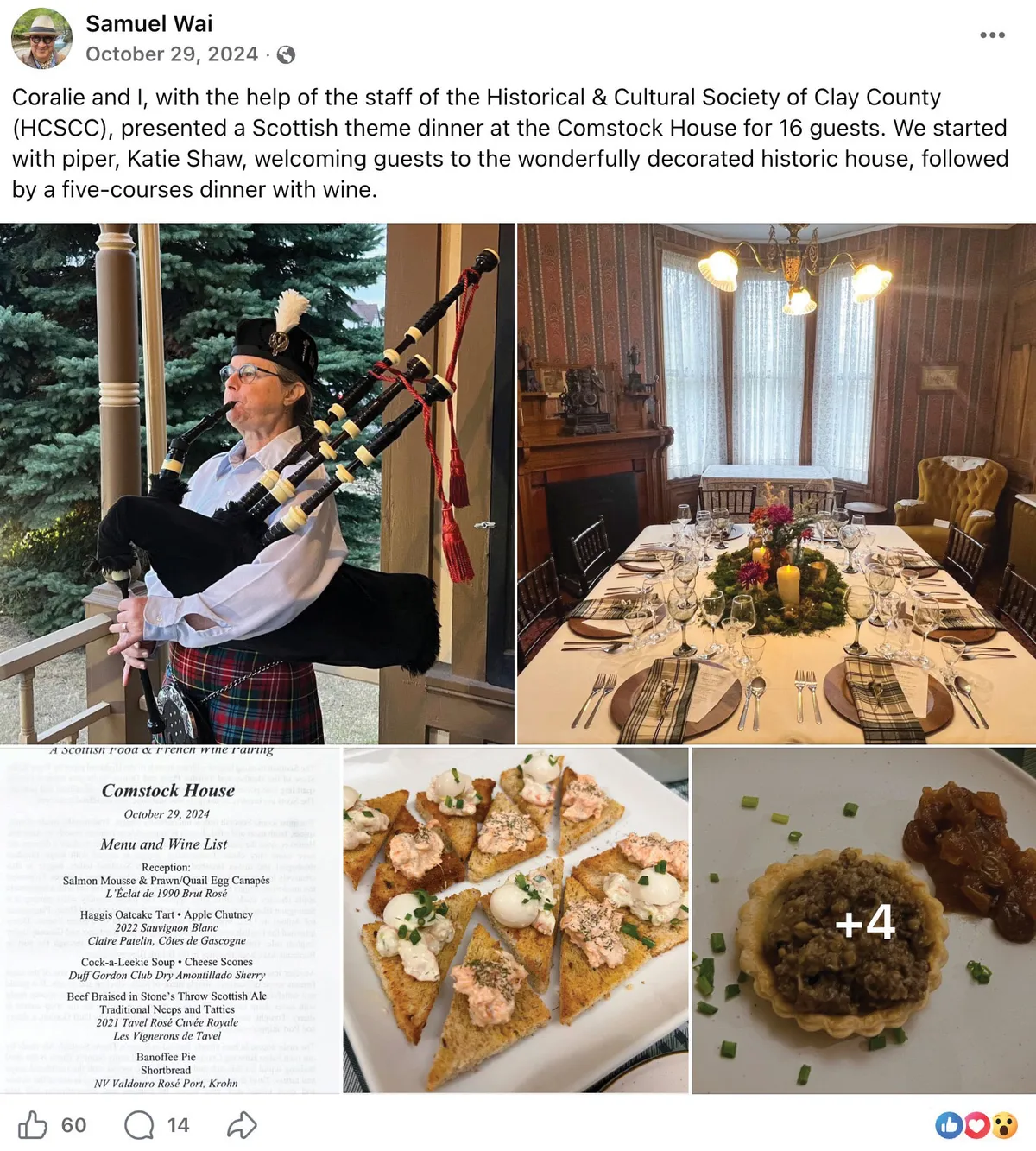
At the Comstock House, one of Sam Wai's dinners can begin with a count of 16 guests, seven wineglasses at each setting, 10 pieces of silverware, and seven courses inspired by the final first-class dinner aboard the Titanic. Guests may arrive in Edwardian dress. Wai may greet them in a dark, naval-style coat.
The evening ends with another count of money raised for the cultural institution that opened its doors.
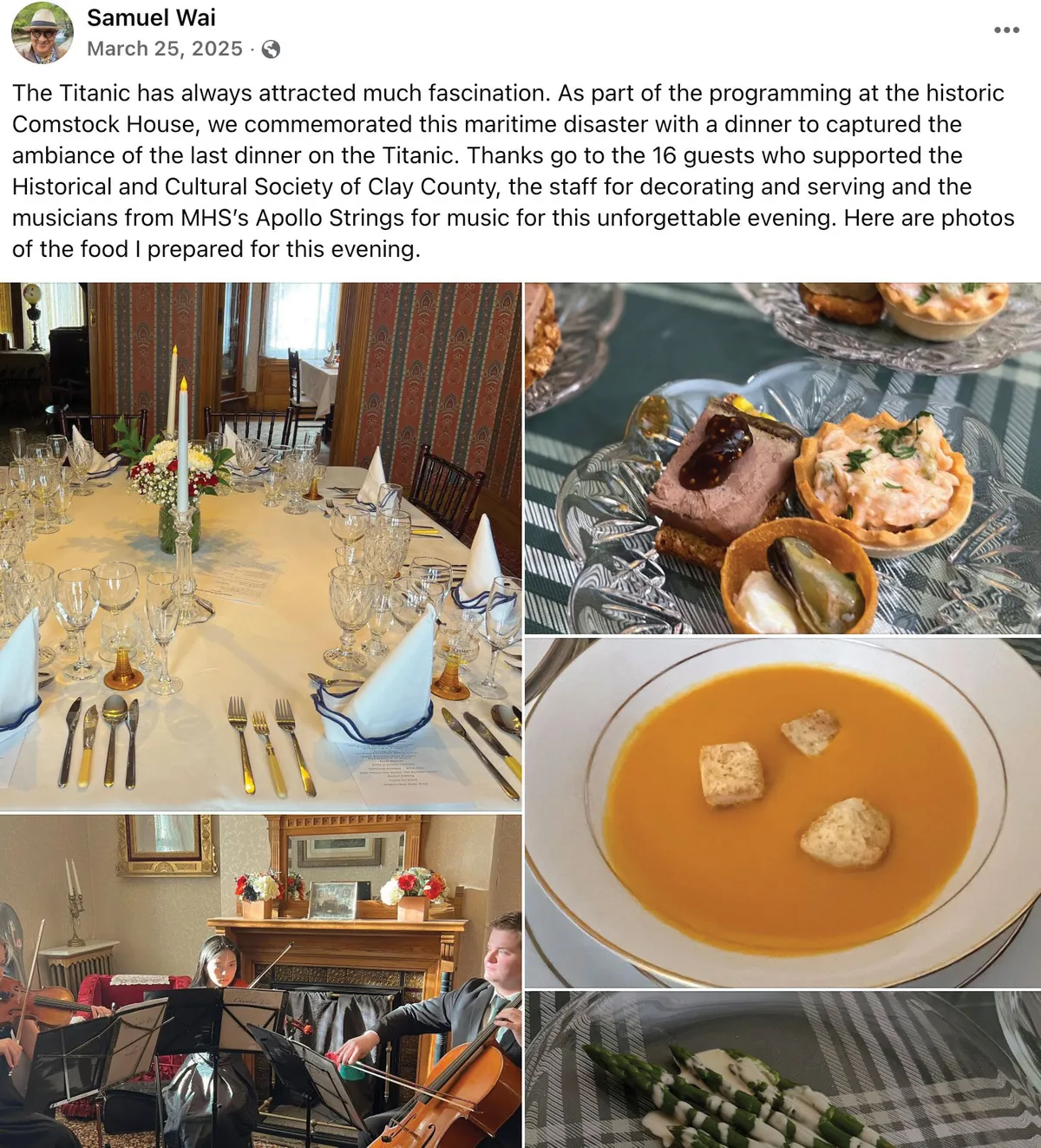
"These meals are more than just food," Wai said. "It's a package of theater."
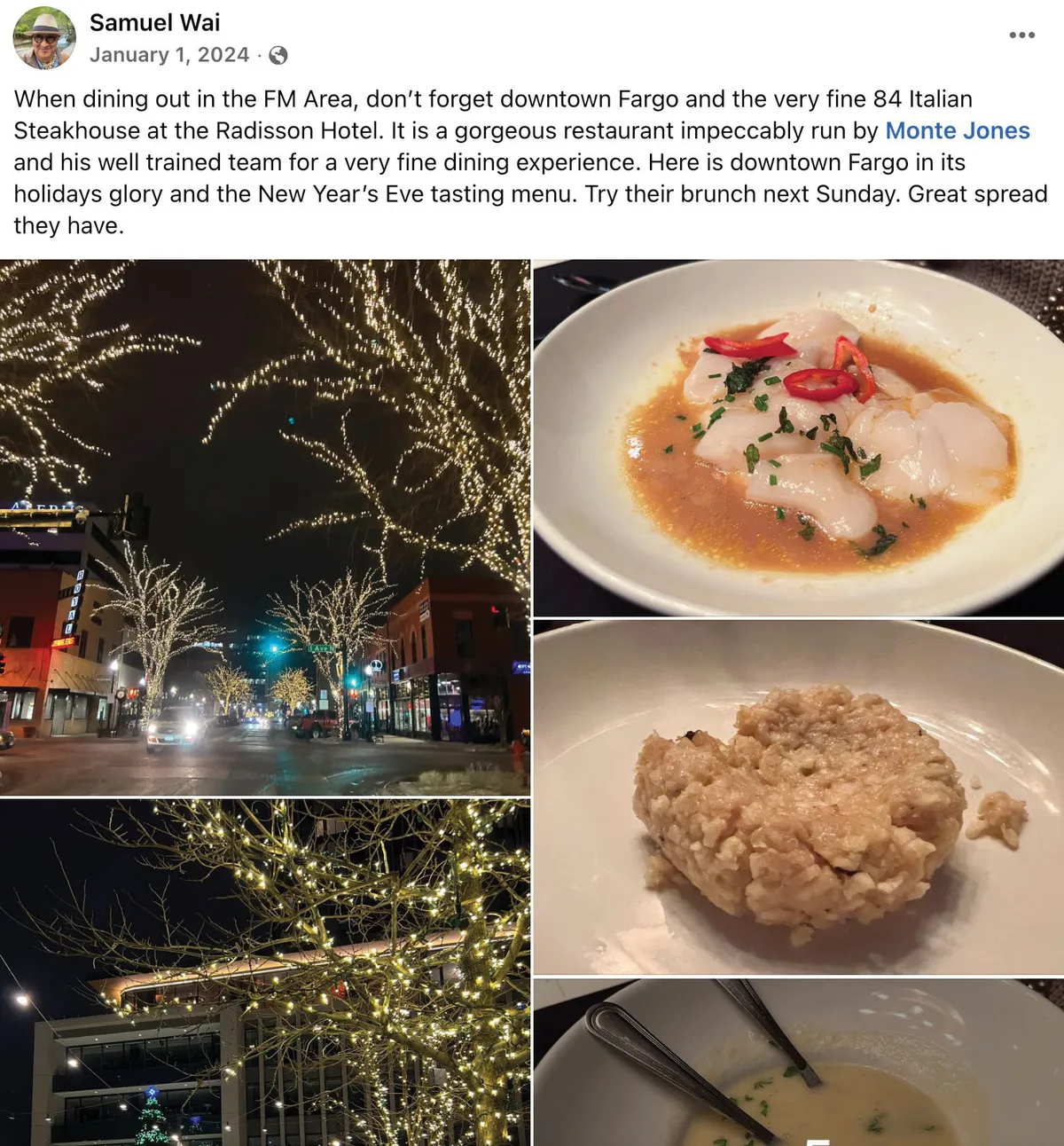
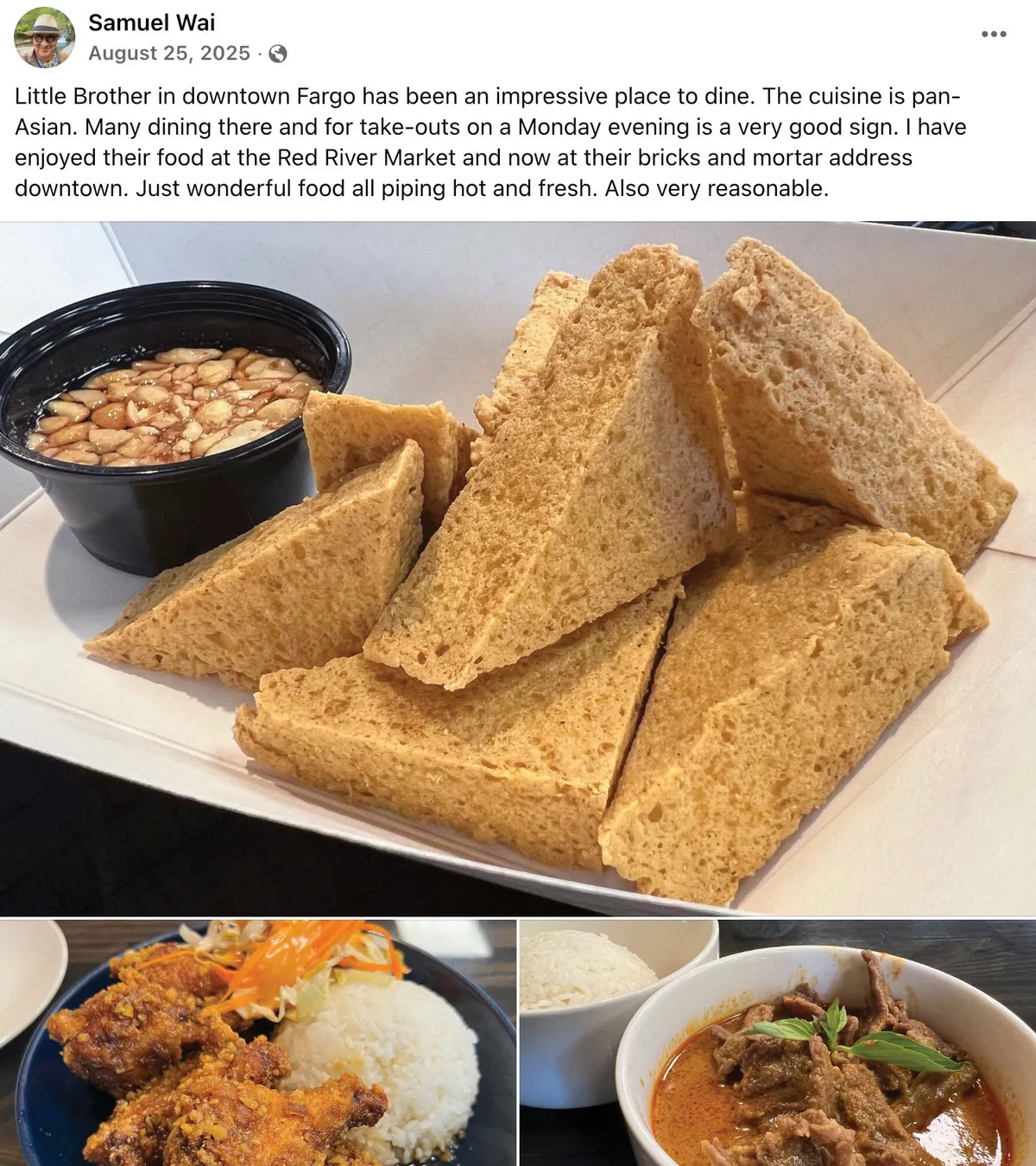
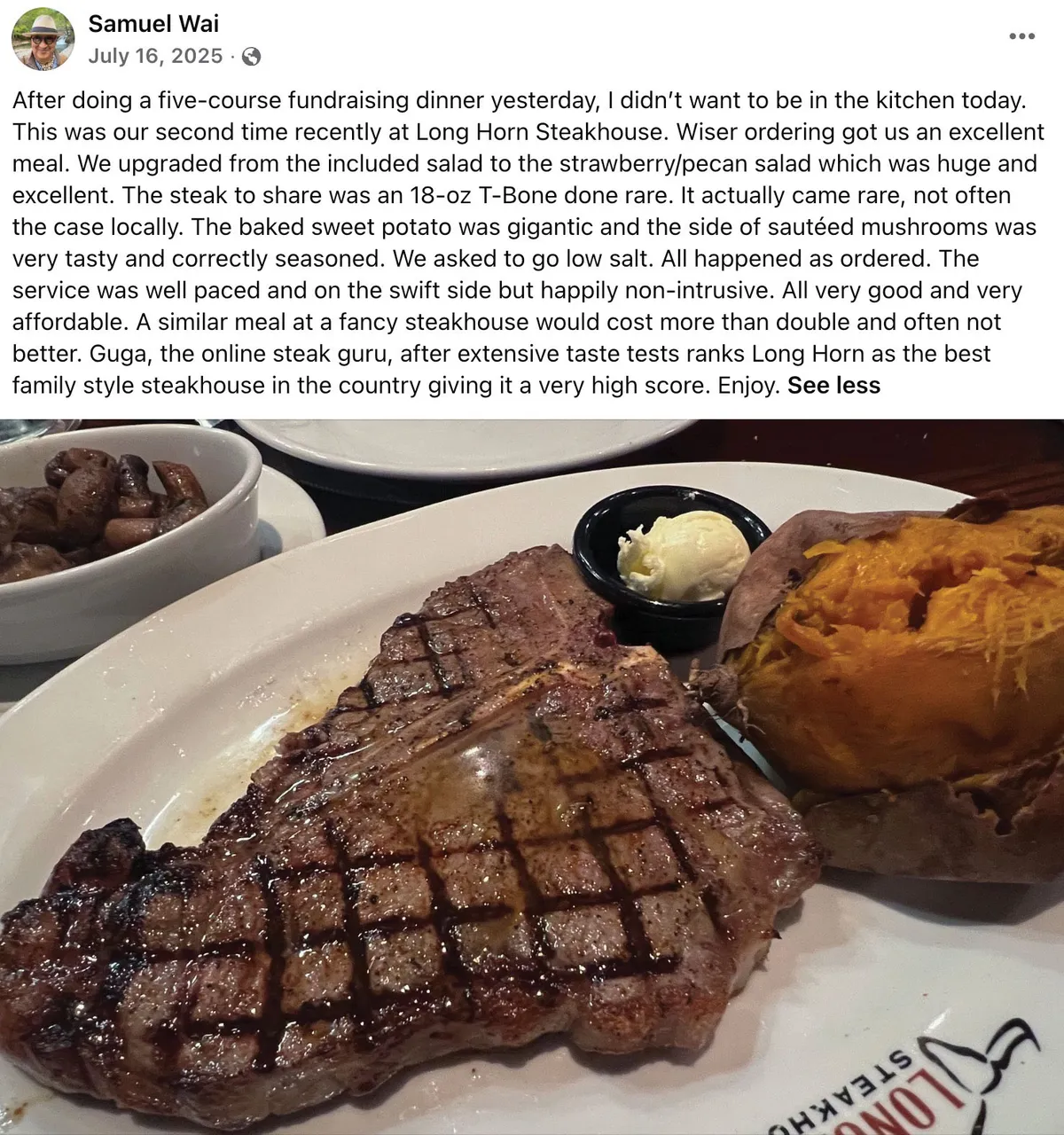
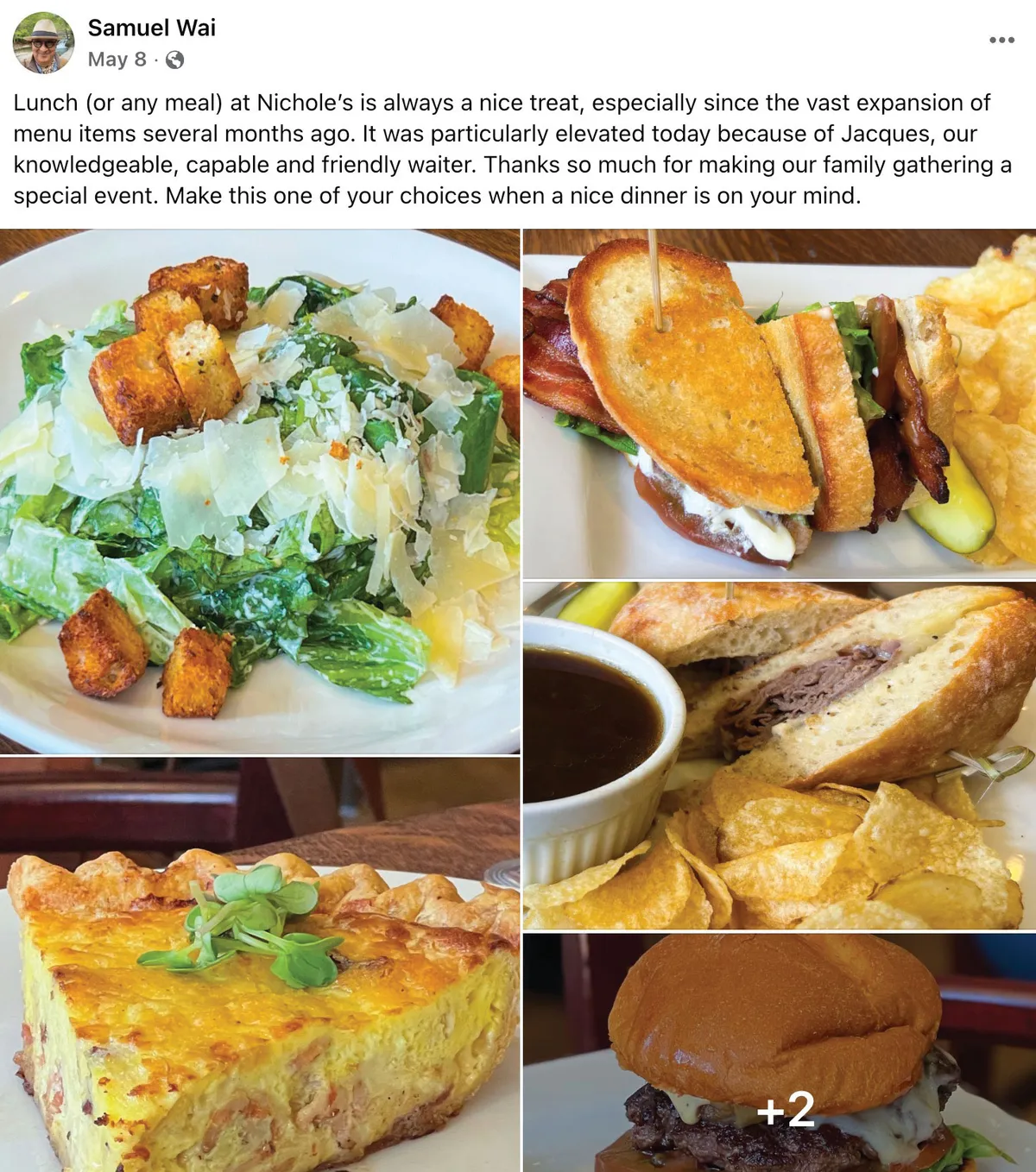
Wai's name is familiar in local food circles. His home-cooking posts and restaurant observations can reach thousands of readers. He has taught wine courses for decades and, in 2023, delivered a TEDxFargo talk about wine's roots in agriculture, history and place. But he is quick to correct any assumption that he is trying to build a second career as a food personality.
"I am retired," he said. "I have nothing to sell."
Visibility, to Wai, is only helpful to fill seats at fundraising dinners.
"Being known facilitates fundraising for me," he said. "That's my motivation."
For more than a decade, Wai and his wife, Coralie, have used food, hospitality, and carefully selected wines to support organizations including the Historical and Cultural Society of Clay County, the NDSU Challey School of Music, the Fargo-Moorhead Symphony Orchestra, Fargo-Moorhead Opera, Folkways, The Rourke Art Gallery + Museum and Plains Art Museum. Wai designs the menus, cooks the food, and works with volunteers to serve it. He and Coralie generally provide the wine and sometimes the ingredients as well.
In one particularly active year, Wai estimates that the dinners generated roughly $46,000 to $47,000 for arts organizations.
Finance Meets Philosophy
Wai was born in Hong Kong and spent part of his childhood in Tokyo. He arrived in Moorhead in 1972 to attend what was then Moorhead State College (now Minnesota State University Moorhead). He wanted to study somewhere he could hear classical music.
The symphony helped bring Wai to Fargo-Moorhead. More than half a century later, he is still finding ways to sustain it.
He graduated in 1976 with degrees in finance and philosophy. Wai had imagined pursuing a doctorate and teaching philosophy, but life took him into business instead. He spent most of his career at American Crystal Sugar, eventually retiring as the company's treasurer.
In retrospect, finance and philosophy seem almost like a blueprint for the work he does now, which is filled with structure and meaning, an understanding of both what something costs and why it matters.
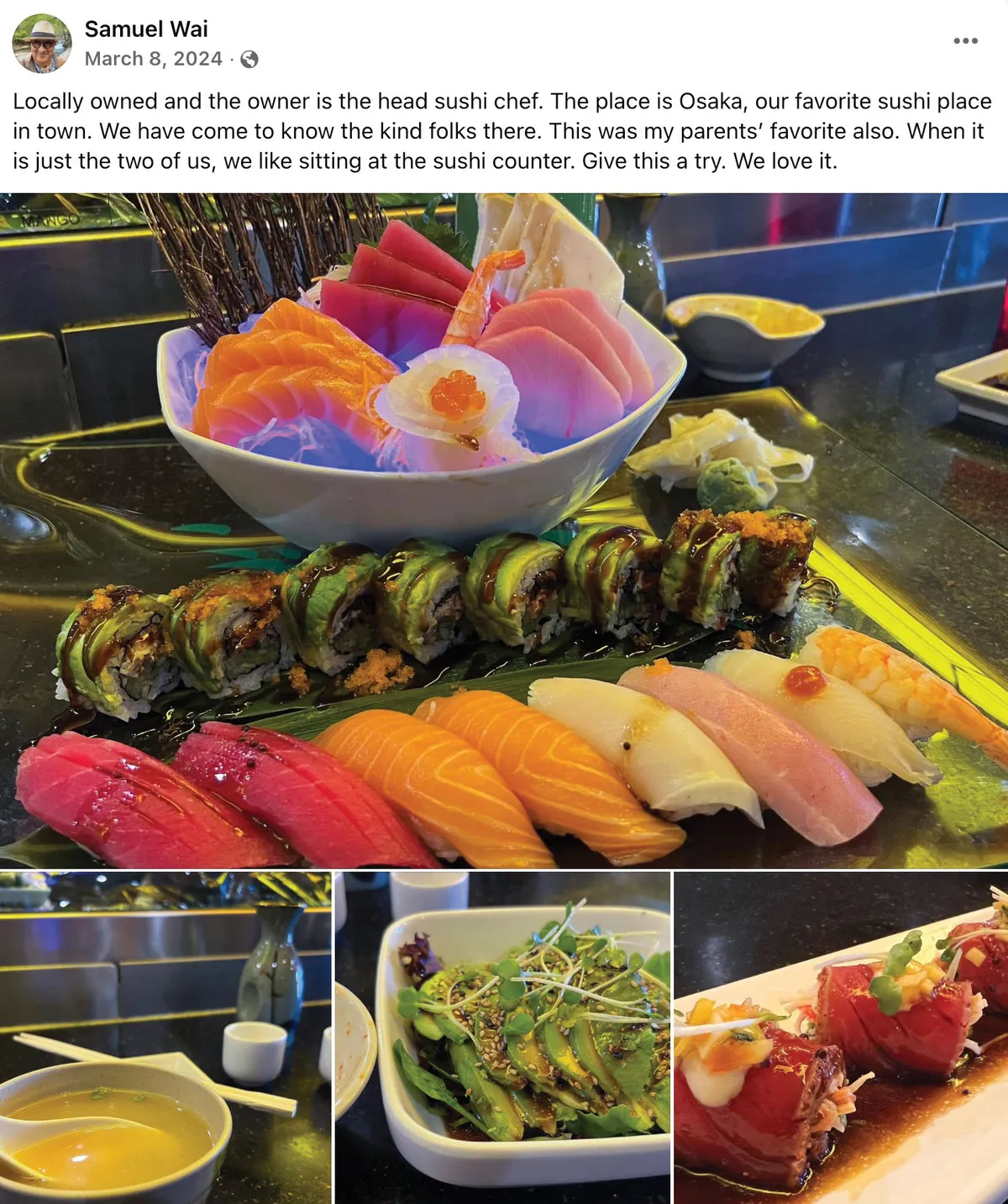
Wai never abandoned the humanities while building his career. He read, traveled, visited museums and listened to classical music. Retirement simply gave him more time to bring those interests together.
"That's really my true love," he said of the arts.
His culinary education also began in Moorhead. As a college student living with three other young men, the roommates pooled their grocery money, and Wai put lasagna, pasta, casseroles, rice dishes, and other economical meals on the table.
"They came home after school," he said, "and they had a great meal."
At about the same time, he began studying French cooking through the work of television cooks and writers such as Julia Child and Graham Kerr. What interested him was the underlying systems of how to thicken, reduce, emulsify, braise, season, taste, and correct.
"La technique," Wai said.
Once a cook understands those fundamentals, he believes, recipes become more like references. A cook can taste a sauce, recognize that it needs acidity or richness and know how to bring it into balance.
"A bad meal takes about the same time to cook as a good one," he said. "It takes the same cleanup. It's doing the right things."
The way to learn is to cook boldly, make mistakes, and resist the impulse to throw away anything that initially goes wrong. Most dishes, Wai says, can be repaired, or at least repaired enough to be eaten.
"A good meal is about balance," he said. "Sharpness against sweetness, acidity against richness, one flavor giving shape to another. If it's done perfectly, it's magical."
That grounding in classical technique is what allows Wai to turn a historical menu into a functioning dinner.
Menus from the Titanic survived, but complete recipes did not. To someone without a background in French cooking, a dish such as salmon with mousseline sauce may be little more than an evocative name. To a classically trained cook, the name contains much of the necessary information. The tradition itself becomes the recipe.
Wai can study what was served, understand the culinary vocabulary of the period, and build a version suited to a modern fundraising dinner. The same method can be applied to meals inspired by Scotland, southern France, Greece, the Alps, the Gilded Age, or an 18th-century American tavern.
The Table Is a Time Machine
Wai is not interested in novelty for novelty's sake. His food is culturally grounded and traditional rather than experimental.
The purpose is not to modernize a culture until it becomes unrecognizable. It is to understand what people in a particular place ate, how they cooked it, what they drank alongside it, and what history brought those elements together.
Wai approaches wine in much the same way. His classes have never primarily been consumer guides about which bottle to buy. He teaches about geography, agriculture, religion, trade, history, and the foods that developed alongside a region's wines. A pairing is not a mathematical formula, in his view. Often it is a relationship tested by generations of people who cooked and drank in the same place.
Wine also changes the pace of a meal.
"It's going to slow you down," Wai says. "There's a cultural aspect to it."
That slowing down is central to the experiences he creates. The dinners ask guests to look closely, listen, taste, talk, and inhabit a subject together.
For a Revolutionary-era luncheon at The Rourke, for example, Wai prepared a progression that included corn fritters with Minnesota maple syrup, a berry shrub, green salad, succotash, Anadama bread, Brunswick stew and Martha Washington's cherry pie. The museum described the dishes as Revolutionary-era-appropriate "victuals," prepared by Wai in his home kitchen as a gift to the institution.
A menu like that does more than feed a room. Each course becomes an entry point into the larger stories of how taverns functioned in colonial life, what ingredients were available, how a dish evolved, and what figures such as Washington, Franklin, Adams, or Jefferson might have recognized at the table.
The setting carries part of the narrative. At The Rourke, diners may sit surrounded by paintings. At the Comstock House, the architecture supplies an atmosphere no rented banquet room could reproduce.
"Sitting amongst artwork hung all around your dining table," Wai said, "that's a priceless ambiance."
Then come the flowers, linens, glassware, silverware, period clothing, and historical commentary. At a Titanic dinner, guests may dress for 1912. At a Gilded Age event, the room can evoke Newport or New York.
"The food is only part of it," Wai said.
The romance of the finished table depends on profoundly unromantic logistics.
Wai may arrive with portable induction burners, a roaster, steam trays, and carefully labeled containers. He favors certain braises and other dishes that become better after resting overnight. He may follow a hot course with a cold one, giving the makeshift kitchen time to reset before the next round. Pasta can be boiled on site while its sauce waits, already prepared. Every dish must be designed not only for flavor and historical relevance, but for the actual equipment, volunteers, and minutes available.
"Planning is extremely important," he says.
Making the Case for Culture
Wai is careful to say that Fargo-Moorhead contains countless worthy causes. His focus on the arts is not a judgment against health, human services, or other community needs.
It is partly a matter of love. He has spent his life with classical music, museums, history, literature, travel and art. It is also a matter of where he believes his particular abilities can have the greatest effect.
Human needs often make their urgency immediately visible. The needs of an orchestra, opera company or museum can be harder to communicate.
"Classical music and oil paintings on the wall are not as easy to reach a sympathetic audience," Wai said.
Food gives him a way to make the case without delivering a conventional appeal. Instead of asking people merely to understand why culture matters, he gives them an evening in which culture is alive around them.
"You have to concentrate on what you do well," he said.
For Wai, the food is the lever. Historical knowledge gives it depth. Hospitality gathers the right people around the table. The resulting generosity belongs to the community.
There is another source of urgency. At 72, Wai has watched peers become ill, lose their mobility, or die. He is conscious that decline does not always arrive gradually. A person can move quickly, as he puts it, from "go-go" to "no-go."
For much of adulthood, he said, the central questions concern money, careers, children, and whether a family will have enough. Then the children grow up. Retirement arrives. The old scarcity recedes, and another takes its place.
"I no longer have anybody depending on me," Wai says. "Now I may not have enough time."
So Wai and Coralie continue to travel. They return regularly to Greece and other places in Europe where their relationships with places, cooks, and restaurant owners have developed over years. Wai can still drive in Europe, climb through an archaeological site, and help other travelers understand what they are seeing and eating.
Asked what he is doing to preserve that ability, Wai offers no elaborate formula.
"Just go, go, go until I can't go," he says.
That urgency does not make his dinners somber. It makes them generous.
Wai takes things that could remain private pleasures, knowledge, travel, cooking, wine, and time, and puts them into circulation. A bottle is opened. A historical menu is revived. A museum fills after hours. Musicians perform. Strangers become tablemates. An organization leaves the evening with more resources than it had before.
"As long as I can still do it," Wai says, "I'll help bring some money."
What to Know About Sam Wai's Fundraising Dinners
How does Sam Wai raise money for Fargo-Moorhead arts organizations?
Wai designs and cooks multi-course historical fundraising dinners at venues such as the Comstock House and The Rourke Art Gallery + Museum. He and his wife, Coralie, typically provide the wine and often the ingredients, with proceeds supporting groups like the Fargo-Moorhead Symphony Orchestra, Fargo-Moorhead Opera, Folkways, and the Historical and Cultural Society of Clay County.
What is a Comstock House fundraising dinner like?
Dinners can include up to 16 guests, multiple courses built around a historical period or event, period-appropriate dress, and live music. Past themes have included a Scottish evening, an Italian regional dinner, and a re-creation of the final first-class dinner served aboard the Titanic.
Which Fargo-Moorhead arts groups has Wai supported?
Wai's dinners have benefited the Historical and Cultural Society of Clay County, the NDSU Challey School of Music, the Fargo-Moorhead Symphony Orchestra, Fargo-Moorhead Opera, Folkways, The Rourke Art Gallery + Museum, and Plains Art Museum.
How much money have Wai's dinners raised for local arts organizations?
In one particularly active year, Wai estimates his fundraising dinners generated roughly $46,000 to $47,000 for arts organizations in the Fargo-Moorhead area.
Published August 13, 2026
