Take Advantage of Plains Art Museum
Expanding Access, Reimagining Engagement, and Building a Museum for the Next Generation Plains Art Museum has always held a unique place in Fargo’s artistic identity. It’s simultaneously a community hub, a teaching center, a nationally recognized institution, and an anchor for downtown culture. But under the leadership of Director and CEO Erin Shapiro, the museum


Expanding Access, Reimagining Engagement, and Building a Museum for the Next Generation
Plains Art Museum has always held a unique place in Fargo’s artistic identity. It’s simultaneously a community hub, a teaching center, a nationally recognized institution, and an anchor for downtown culture. But under the leadership of Director and CEO Erin Shapiro, the museum is stepping into an era defined by accessibility, education, and deepened regional connection while planning one of the most significant facility expansions in its history.
“People sometimes think they need a background in art to enjoy a museum,” Shapiro said. “But this space is for everybody. We’re open seven days a week, we’re completely free, and we want people to treat us like a public resource. Pop in on a lunch break, walk through for twenty minutes, come back whenever. There should be no barrier—financial, educational, physical, or emotional—to being here.”
That belief is evident in every part of the museum’s programming, from family art days to high-level exhibitions borrowed from national institutions. And with a major capital campaign underway, the Plains Art Museum is preparing to expand both what the public sees, and what the public understands, about how an art museum operates.
A Museum with No Barriers
One of the most defining characteristics of the Plains Art Museum is that general admission is free, always, and the museum is open seven days a week.
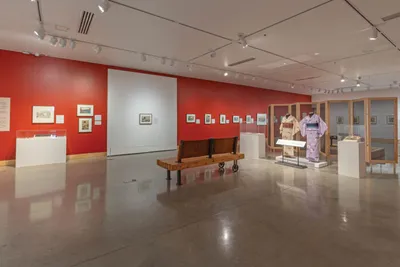
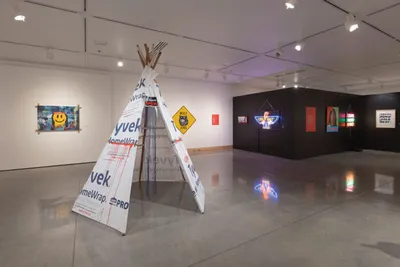
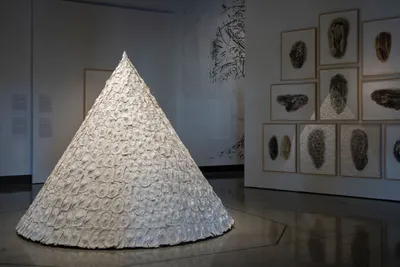
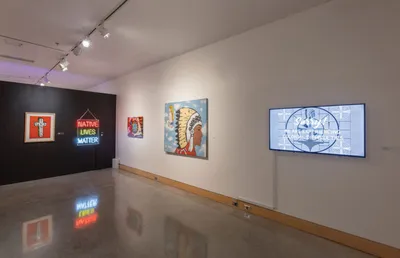
Inside, visitors can move freely through exhibitions that match the caliber of major metro museums, including recently installed national shows on women artists, Edo-period Japanese art, and modernist masters like Andy Warhol and Jasper Johns. Tucked among these is the museum’s ongoing commitment to Indigenous artists and regional creators, ensuring local culture is never overshadowed by celebrated national names.
Yet the exhibitions are only half the story.
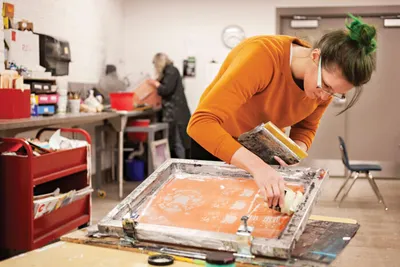
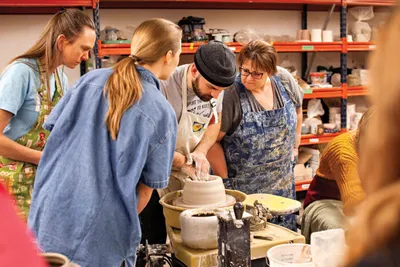
Across the skybridge, in The Katherine Kilbourne Burgum Center for Creativity, the museum runs one of the most robust community arts education programs in the region. From ceramics to printmaking, early childhood classes to advanced painting workshops, the Center is nearly always active, and crucially, scholarships are available for both youth and adults.
“We have financial assistance for classes, and it’s first come, first served,” Shapiro said. “We really want people to take advantage of that. Art shouldn’t only belong to people who can afford tuition.”
Alongside structured classes, the museum offers:
- Open Studio memberships in ceramics, giving makers independent access to studio and kiln space.
- Family programming nearly every week.
- Kid Quest, a free community staple held the first Saturday of every month during the school year, drawing more than 100 children for hands-on arts activities
- Thursday night events, featuring extended hours until 9 p.m., curator talks, community conversations, or guided tours.
The museum also hosts sensory-friendly Sundays, provides sensory backpacks, and creates all gallery text at a fourth-grade reading level.
“People want accessibility,” Shapiro said. “They want to feel like this is their museum. Our job is to make that true.”
Curating Years Ahead
If you’ve ever wondered how exhibitions are selected, or why they seem to arrive with the precision of a calendar, the answer that the museum programs two to three years in advance.
Right now, the Plains Art Museum is booked through 2028
As North Dakota’s only accredited art museum, Plains is able to borrow from institutions across the world, something most people don’t realize. Accreditation requires strict environmental controls, conservation standards, and security measures, but it also opens doors to galleries trust Plains with priceless works from major collections.
“We want the same caliber of exhibitions that people expect from places like the Walker or the Minneapolis Institute of Art,” Shapiro said. “We might be on a smaller scale, but the quality is on par.”
Some exhibitions originate from the museum’s own curatorial vision; others come from major traveling shows; many merge global artworks with Plains’ own regional collection. The current exhibition Women Artists: Four Centuries of Creativity is a perfect example because it pairs iconic names like Mary Cassatt with works by women artists from the Plains permanent collection.
And while most visitors see the art on the walls, what they don’t see is equally important.
The museum houses more than 6,000 artworks, but only 1–3% are on view at any time. To change that, a transformational project is underway.
Opening the Vault to the Public
Behind every gallery wall is the quiet backbone of the museum, its permanent collection. This is the work future generations will inherit, long after exhibitions cycle in and out. But until now, almost no one has ever seen where or how that collection is stored.
That’s about to change
The Plains Art Museum is currently in the non-public phase of a major capital campaign—one that will expand and modernize collection storage, introduce a groundbreaking open-storage gallery, and create a new welcome center that completely reshapes how visitors enter and move through the museum.
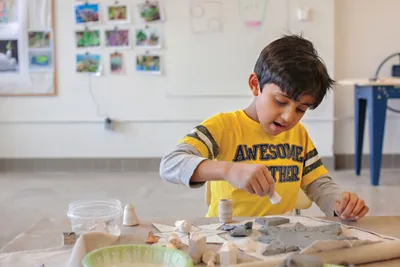
Art classes are at the Plains Art Musuem for all ages!
Museum Hours:
Monday, Tuesday, Wednesday, Friday, Saturday, Sunday
11 a.m. to 5 p.m.
Thursday 11 a.m. to 9 p.m.
The first major element of the project is doubling the square footage of the museum’s climate-controlled vault. With more than 1,000 works accessioned in the past year alone, growth isn’t slowing, and improved storage is crucial for stewardship.
The new design doesn’t just solve a logistical need. It transforms the museum’s relationship with the community
Only 18% of U.S. art museums have open-storage collections. Plains Art Museum will soon join that elite group.
A floor-to-ceiling glass wall will allow visitors to view portions of the vault — a transparent look into how a museum preserves history, culture, and creativity. Objects will rotate regularly so the public can see more than the typical 1–3% that fit in gallery exhibitions
For many visitors, this will be the first time they understand what a permanent collection truly is.
“It’s educational,” Shapiro said. “The average person doesn’t get to see the behind-the-scenes work museums do. This will change that.”
The campaign also includes a redesigned welcome center between the main museum and the Center for Creativity. The space currently opens into a utilitarian alley corridor. The renovation will turn it into a bright, inviting, historically respectful entryway that improves circulation between buildings and creates a cohesive visitor experience, especially from the parking-lot side of the campus.
Construction is expected to begin summer 2025. While renderings are currently private, the scope of the project is substantial enough to shift how the museum functions daily.
For donors, it offers something tangible. For visitors, it signals a modernized Plains Art Museum that’s ready for the next 50 years.
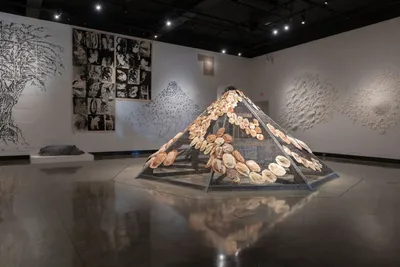
2026 Preview: Textiles, Treaties & Conversations That Matter
While the capital project moves forward, the programming machine continues full speed. Because exhibitions are booked years ahead, the museum already has a strong sense of what 2026 will bring, and two shows in particular stand out.
A Major Textile and Art Quilt Exhibition
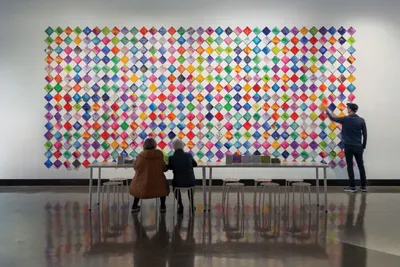
This spring marks the museum’s first large-scale textile exhibition in years. The show, named “Color Improvisations,” features art quilts from Europe and North America, many of them monumental in scale and meticulously crafted.
The museum expects the exhibition to attract audiences who don’t always see themselves reflected in contemporary art shows—particularly quilters, textile artists, fiber artists, and regional makers looking for new inspiration.
The programming around it will include:
- Textile workshops
- Quilting demonstrations
- Hands-on fiber art classes
- Family-friendly activities related to pattern, fabric, and form
Shapiro expects this exhibition to reach groups who may be new to the museum entirely.
“Know Your Treaty”: A Collaboration with the Smithsonian
Also opening in the spring is Know Your Treaty, a significant, research-based exhibition developed with support from the Smithsonian Institution.
The project involves:
- Funding to pay Indigenous researchers
- Collaboration with the Treaty Museum in Park Rapids
- Work guided by Tyrell Iron Eyes, archivist for the Standing Rock Reservation
- Historical and contemporary Treaty research specific to our region
- Text panels and storytelling created directly from this research
- Artifacts from Plains Art Museum’s permanent collection
- Contemporary works purchased from Native American artists
After its run in Fargo, the show will travel to schools and cultural centers throughout the region, ensuring the work reaches the communities it documents.
A Museum for Everyone: Listening to What the Community Needs
For all the museum’s ambitious expansions and highprofile exhibitions, the strongest message Shapiro hears from the community is surprisingly simple:
Make it accessible. Make it ours.
Accessibility means far more than free admission, though that remains one of the museum’s most powerful commitments. It also means:
- Physical access: clear pathways, open hours, zero-cost entry.
- Educational access: text written at a fourth-grade reading level, programs that welcome non-experts.
- Cultural access: exhibitions and classes that represent the full spectrum of people who call this region home.
- Sensory access: Sensory Sundays, sensory backpacks, and spaces adapted for neurodivergent visitors.
- Financial access: scholarships available for both youth and adult classes.
“Museums can feel intimidating to people,” Shapiro said. “We’re constantly working to eliminate that. We want this to feel like your museum—a place where you belong, no matter who you are or what background you come from.”
That philosophy shows up in the artist roster, in the programming, in the tone of wall text, even in the way staff are trained to greet visitors.
It’s also shaping the museum’s physical future. When the new welcome center and open-storage gallery are complete, the Plains Art Museum won’t just be easier to navigate, it will be easier to understand. Visitors will see the collection; they’ll see how it’s preserved; they’ll see the museum’s responsibility to steward cultural history.
If You Haven’t Visited the Plains Art Museum in a While…
There may be no better time to rediscover it.
1. Free Admission, Every Day
No tickets, no pressure. Walk in and explore, whether you have 20 minutes or two hours.
2. Big-Museum Quality Exhibitions
From major national loans to Indigenous art to contemporary regional voices, the caliber rivals far larger city museums.
3. The Center for Creativity
Ceramics and printmaking classes, painting and drawing workshops, early childhood programs, and free or scholarship-supported options
4. A Museum That Meets You Where You Are
Whether you’re a parent, a working professional squeezing in lunch-break visits, a student, a practicing artist, or someone who “isn’t really an art person,” the museum is designed so you always feel welcome.
5. A New Era on the Horizon
The upcoming capital improvements—from expanded collection storage to a new welcome center—will fundamentally transform visitor experience and museum transparency
For Shapiro, the Plains Art Museum isn’t just keeping up; it’s leading. Not in scale, but in intention. Not in size, but in purpose.
plainsart.org
Facebook | /plainsartmuseum
Instagram | @plainsartmuseum
Published February 5, 2026
