The Roof Is No Longer Just a Roof
For years, most homeowners thought about their roof in one of three moments: when they bought the house, when a storm rolled through, or when water started dripping where water was not supposed to be.


For years, most homeowners thought about their roof in one of three moments: when they bought the house, when a storm rolled through, or when water started dripping where water was not supposed to be.
Otherwise, the roof was just there.
It did its job quietly. It took the wind, the snow, the hail, the freeze-thaw cycles, the summer heat, and the spring storms. And unless something visibly went wrong, it was easy to assume everything was fine.
But according to Vita Roofing Founder Clay Blair, that assumption is becoming harder for homeowners to make.
The roofing conversation is changing. And in many cases, it is not being driven by a leak. It is being driven by insurance.
“We run into a lot of clients every year where they say, ‘Our insurance company said if we don’t replace our roof, they’re not going to renew our policy,’” Blair said.
For many homeowners, that can be a jarring call to receive. A roof may look “fine” from the driveway. It may not be actively leaking. It may not have obvious missing shingles. But if an insurance carrier decides the roof is too old, worn, or too much of a future risk, the homeowner may suddenly be pushed into one of the largest maintenance decisions they will ever make.

Across the insurance industry, roof age and roof condition are receiving more attention as carriers try to manage the cost of weather-related claims. A roof’s age, condition, and materials can affect whether a homeowner keeps coverage, qualifies for renewal, or receives full replacement-cost protection after damage. Some policies may also shift older roofs from replacement cost value to actual cash value, which means depreciation is deducted from the payout.
For homeowners, that technical distinction can become painfully practical.
With replacement cost value coverage, a policy generally pays the cost to repair or replace damaged property without subtracting depreciation. With actual cash value coverage, the insurer pays the depreciated value based on age, condition, and expected remaining life. The National Association of Insurance Commissioners explains it simply: replacement cost pays the cost to repair or replace without depreciation, while actual cash value pays the depreciated cost.
In other words, an older roof can change the financial outcome of a storm claim.
Blair said he first heard about insurers tightening up on roofs a couple of years ago. Last year, Vita Roofing started seeing it more often. Now, it has become part of the regular customer conversation.
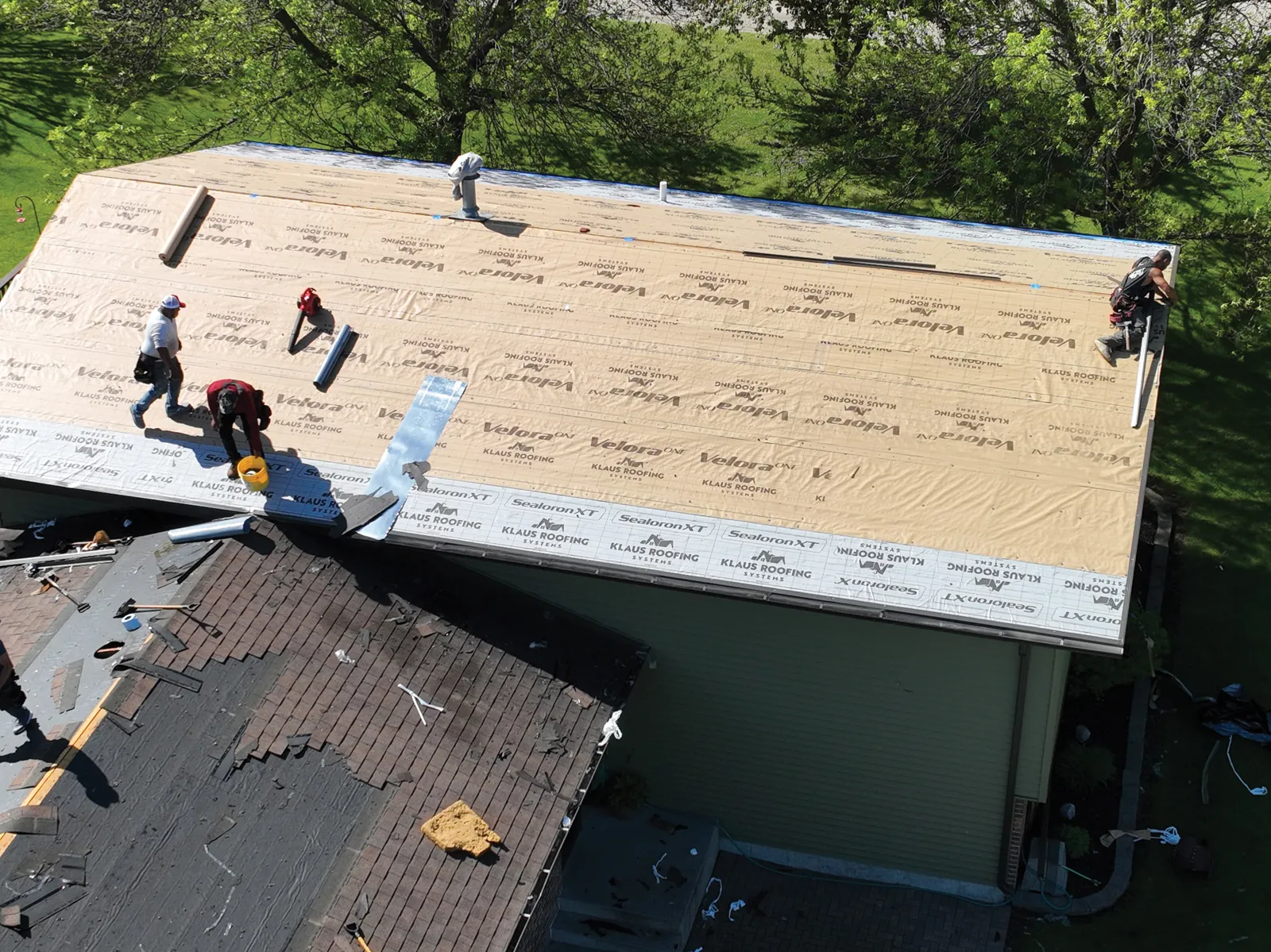
“We just had another one this morning that called in and said, ‘Yep, our insurance said they won’t renew our policy until we replace the roof,’” Blair said.
That pressure, he said, is showing up on roofs that are often 10 to 15 years old, even though many homeowners still have roofs much older than that.
“There are still some roofs out there that are 18, 20, 27 years old,” Blair said. “That’s just such a new thing that insurance is starting to roll out now. It changes the market a lot.”
Questions to Ask Before Replacing Your Roof
What class of shingle am I getting?
Class 3 and Class 4 shingles are designed for better impact resistance than older or lower-rated products. Class 4 is typically the highest impact rating.
Does this roof qualify for an insurance discount?
Some insurance carriers offer discounts for impact-resistant shingles, but the amount and requirements vary by policy.
Is my roof covered at replacement cost or actual cash value?
Replacement cost coverage generally pays more after a covered loss. Actual cash value factors in depreciation, which can reduce the payout on an older roof.
What exactly does the warranty cover?
Ask whether the warranty covers materials, labor, tear-off, disposal, workmanship, leaks, storm damage, or only certain defects.
What does “lifetime” actually mean?
A “lifetime” warranty may mean the lifetime of the roof or product—not necessarily the homeowner’s lifetime.
Is it in writing?
If a contractor says something important during the sales process, make sure it appears clearly in the contract or warranty paperwork.
Why Insurance Companies Care So Much About the Roof
To a homeowner, the roof is one part of the house. To an insurance company, it is one of the home’s first and most important lines of defense.
A failing roof can turn a hailstorm, wind event, or heavy rain into a much larger claim. Once water enters a home, damage can spread quickly to insulation, ceilings, walls, flooring, electrical systems, and personal property. That is why insurers often evaluate roof age, roof material, maintenance history, and prior claims when pricing or renewing homeowners’ policies.
Roof-related claims are also a major part of the property insurance landscape. Wind and hail are among the most common causes of homeowners’ insurance claims, and roof condition plays a central role in how vulnerable a home is during those events.
“I think they’re just cracking down and trying to cover themselves a little bit,” he said of insurance companies. “They’re pushing people to go for higher impact-graded shingles to make those policies last longer.”
That is where Class 3 and Class 4 shingles enter the conversation.
The Rise of Impact-Rated Shingles
Most homeowners do not spend much time thinking about shingle ratings until they are forced to choose a new roof. But in hail-prone and wind-prone regions, the rating can matter.
Impact-resistant shingles are commonly rated under UL 2218, a test standard used to evaluate how roofing materials respond to impact. Class 4 is the highest rating in that system. GAF, one of the major roofing manufacturers, explains that Class 4 shingles pass a test involving a 2-inch steel ball dropped onto multiple locations of a shingle test deck from a height of 20 feet.
That does not mean a Class 4 shingle is indestructible. No roof is. Large hail, repeated impacts, installation quality, roof pitch, age, ventilation, and storm conditions all still matter. But a higher impact rating gives homeowners a better-performing product in the kinds of storms that routinely damage asphalt roofs.
The Insurance Institute for Business & Home Safety has gone even further in studying how impact-resistant shingles perform in real-world hail conditions. IBHS uses lab-made hailstones designed to better replicate actual hail impacts and has developed ratings to help compare products beyond the basic UL 2218 classification. In 2025, IBHS said its updated hail impact-resistant shingle ratings evaluated 24 products representing roughly 95% of impact-resistant shingles sold in the U.S.
For Blair, the industry shift is easy to see.
“Nowadays, it’s all Class 3, Class 4,” he said. “Everyone’s got their Class 3 impact-rated shingle.”
Vita Roofing primarily uses IKO Dynasty for Class 3 and IKO Nordic for Class 4. IKO’s own product information states that Dynasty shingles provide a Class 3 impact rating, while Nordic shingles carry Class 4, the highest possible rating against hail.
“I remember when I first started, nobody was putting on Class 3,” Blair said. “We were one of the first with IKO, because they were Class 3 from the first day they were made.”
Now, he said, Class 3 has become the new normal. Class 4 is becoming the upgrade more homeowners are asking about.
“Class 3 is the new Class 4,” Blair said. “Now, instead of people wanting Class 3, they want Class 4 because insurance is cutting some slack.”
Class 3 vs. Class 4 Shingles
Class 3 shingles
These are impact-rated shingles that have become increasingly common for residential roofs. For many homeowners, Class 3 is now closer to the modern baseline than a premium upgrade.
Class 4 shingles
Class 4 is generally considered the highest impact rating for asphalt shingles. These shingles are designed to better withstand hail and severe weather impacts.
Vita Roofing
Phone: 701-373-1708
Website: VitaRoofing.com
Vita Crew is here for you!
Published June 12, 2026
